Analysis of "Vision of Blessed Alonso Rodriguez" by Francisco de Zurbarán
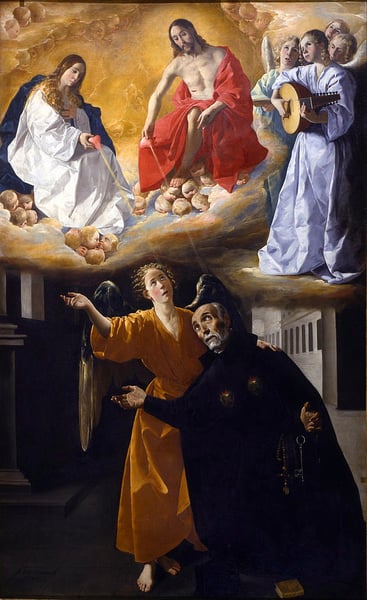
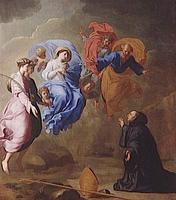
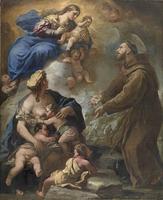
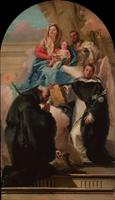
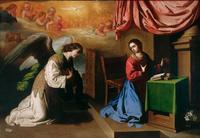
Within the canon of Spanish Baroque painting, Francisco de Zurbarán’s Vision of Blessed Alonso Rodriguez stands as a masterful exemplar of the era’s profound religious intensity and striking naturalism. Executed in the mid-17th century, the work captures a pivotal mystical episode from the life of the Jesuit lay brother Alonso Rodriguez, who experienced a vision of the Virgin Mary and the Christ Child. The painting’s significance lies in how it synthesizes the Counter-Reformation’s call for accessible, emotionally resonant piety with Zurbarán’s signature tenebrist style—a dramatic contrast of deep shadow and sharply focused light that heightens the supernatural atmosphere.
Zurbarán’s composition deliberately isolates the humble brother in a dark, nearly void interior, focusing all attention on his ecstatic, upward gaze. The saint’s worn, plain habit and the tangible realism of his aged hands and weathered face ground the vision in the earthly realm, while the softly glowing celestial apparition above him emanates a divine, weightless grace. This juxtaposition of corporeal detail and ethereal light is a hallmark of Zurbarán’s genius: he makes the spiritual palpably real, inviting the viewer to share in the blessed moment. The painting thus not only illustrates a specific hagiographic event but also embodies the Baroque ideal of art as a tool for devotion—using chiaroscuro, restrained composition, and intense psychological focus to convey the mystery of divine encounter. It remains a quintessential example of how Spanish Baroque painting balanced stark realism with transcendent spirituality.