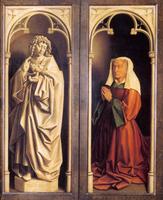
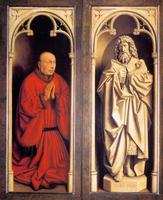
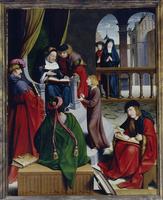
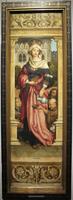
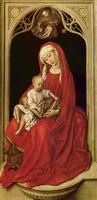
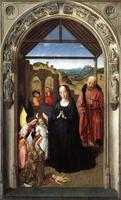
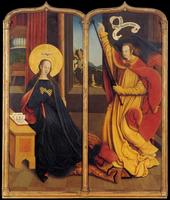
This portrait of Isabella Borluut, a donor panel from Jan van Eyck’s Ghent Altarpiece, epitomizes the revolutionary achievements of the Northern Renaissance. Within the strict conventions of portrait painting, van Eyck elevates the donor figure from mere devotional accessory to a profoundly individualized presence.
Significance: The work is significant for its unprecedented naturalism and technical mastery. Van Eyck’s manipulation of oil paint allows for microscopic detail—from the texture of Isabella’s skin to the subtle play of light across her features—creating an almost tactile realism. This goes beyond simple likeness; it captures a psychological depth that makes the sitter feel present. As a panel within the larger altarpiece, the portrait also redefines the relationship between the sacred and the earthly. By placing a specific, recognizable individual within the divine narrative, van Eyck asserts the spiritual importance of the donor’s gaze and piety. The portrait thus becomes both a record of identity and a vehicle for devotion, establishing a model for intimate, individualized portraiture that would define the Northern Renaissance.