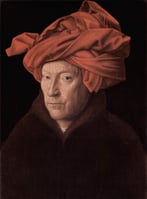
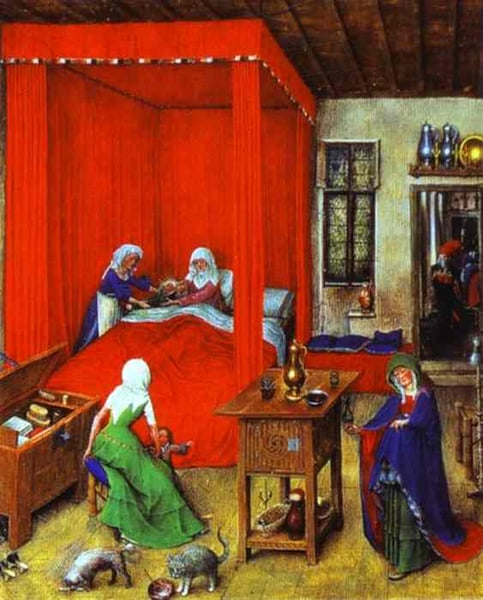
Expertenanalyse zu Jan van Eycks The Birth of John the Baptist
Stil: Northern Renaissance · Genre: religious painting
Based solely on the provided structured facts, here is an expert art historical analysis of "The Birth of John the Baptist" by Jan van Eyck.
Artwork: The Birth of John the Baptist
Artist: Jan van Eyck
Style: Northern Renaissance
Genre: Religious painting
Significance within the Northern Renaissance
As a religious painting by Jan van Eyck, The Birth of John the Baptist would be profoundly significant for its demonstration of the core tenets of the Northern Renaissance style. Van Eyck is renowned for revolutionizing oil painting, and this work would exemplify his unparalleled ability to render textures, light, and atmospheric detail with microscopic precision. The subject—the nativity of John the Baptist from the Gospel of Luke—offers van Eyck the opportunity to infuse a familiar biblical scene with dense, naturalistic observation.
Key elements that would define its significance:
-
Symbolic Naturalism: Van Eyck’s Northern Renaissance approach avoids idealized classical forms in favor of acute realism. The domestic setting of Elizabeth and the infant John would be depicted with meticulous accuracy—rich fabrics, polished wood, glowing candlelight, or a view through a window onto a Flemish landscape. Every object, from a basin to a piece of embroidery, would carry layered theological meaning (e.g., the baptismal theme, John’s future role as forerunner).
-
Mastery of Light and Texture: Van Eyck’s oil glazes create a luminous, almost gem-like surface. The painting would likely use shadow and highlight to sculpt the figures of Elizabeth, the newborn John, and the elderly Zechariah (whose muteness is a key narrative detail). The play of light on metal, glass, or fabric demonstrates the Northern Renaissance obsession with empirical observation.
-
Intimate Religious Narrative: Unlike the grand altarpieces of the Italian Renaissance, van Eyck’s religious scenes often focus on quiet, domestic moments. The birth of John the Baptist—a precursor to Christ—would be treated with reverent intimacy, humanizing the sacred event while embedding it with complex typological references (e.g., the lamb in a stable, alluding to Christ as the Lamb of God).
-
Technical Innovation: Van Eyck’s use of translucent oil layers allowed for unprecedented depth and subtlety of color. Even if the composition follows traditional iconography (such as the mother in bed, the swaddled baby, and attendants), the execution would set a new standard for realism and devotional intensity.
In summary, The Birth of John the Baptist would be significant as a quintessential Northern Renaissance religious painting—a work that marries spiritual narrative with meticulous observation of the material world, showcasing why Jan van Eyck is celebrated as a father of early Netherlandish painting.
Museum / Gallery
Visuell ähnlich
20 Werke mit ähnlicher Komposition und Farbpalette
The Birth of the Virgin
Vittore Carpaccio
The Annunciation
Rogier van der Weyden
The Annunciation
Rogier van der Weyden
The Annunciation
Rogier van der Weyden
Death and the Miser
Hieronymus Bosch
The Mérode Altarpiece - The Annunciation
Robert Campin
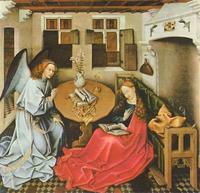
The Annunciation
Robert Campin
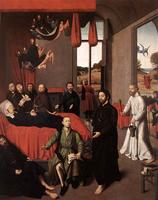
The Death of the Virgin
Petrus Christus
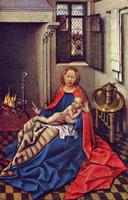
Madonna and Child Before a Fireplace
Robert Campin
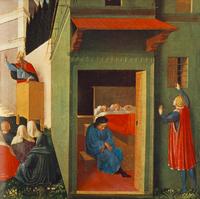
The Story of St. Nicholas: Giving Dowry to Three Poor Girls
Fra Angelico
The Healing of Palladia by Saint Cosmas and Saint Damian
Fra Angelico
The Virgin and Child in a gothic interior
Petrus Christus
Werl Altarpiece - St. Barbara
Robert Campin
Two Legends of St. Nicholas
Gerard David
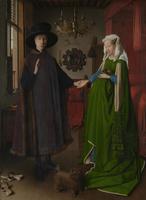
The Arnolfini Wedding. Portrait of Giovanni Arnolfini and his Wife Giovanna Cenami (The Arnolfini Marriage)
Jan van Eyck
Natività di Maria (detail)
Cennino Cennini
The Marriage Feast at Cana
Hieronymus Bosch
Death and the Miser (detail)
Hieronymus Bosch
The Story of St. Nicholas
Fra Angelico
Death and the Miser (detail)
Hieronymus Bosch