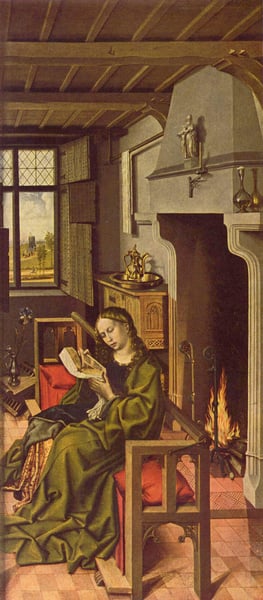
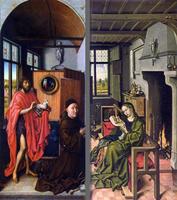
As a religious painting of the Northern Renaissance, Robert Campin's Werl Altarpiece - St. Barbara is significant for its fusion of sacred narrative with the meticulous naturalism that defines the period. The work exemplifies the Northern Renaissance emphasis on realistic detail, domestic interiors, and symbolic objects that ground divine figures in tangible, everyday settings. Within the context of the genre, Campin’s treatment of St. Barbara demonstrates how Northern artists conveyed spiritual gravity through precise observation of textures, light, and space, making the holy accessible while underscoring its transcendent meaning. This balance between earthly verisimilitude and religious devotion marks a key achievement of the style.