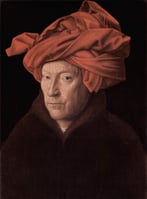
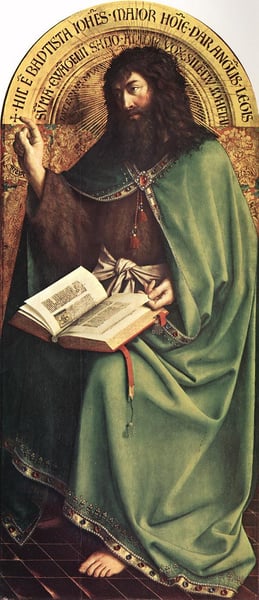
Analisi esperta di The Ghent Altar (detail) di Jan van Eyck
Stile: Northern Renaissance · Genere: religious painting
As an expert in Northern Renaissance art, I can confirm that The Ghent Altarpiece (detail) by Jan van Eyck is a landmark achievement in Western painting, and its significance can be understood through its revolutionary technical mastery and profound religious symbolism.
Working in the Northern Renaissance style, van Eyck elevated oil painting to an unprecedented level of realism. This detail exemplifies his ability to render texture, light, and space with almost microscopic precision—whether in the jewel-like fabrics, the reflections in metal and glass, or the naturalistic depiction of human skin and hair. Such minute attention to physical reality was not mere showmanship; it served a deeply religious purpose. For van Eyck, the physical world was a testament to divine creation, and by painting it with such clarity and beauty, he made the sacred tangible and accessible.
The altarpiece, a polyptych of immense theological complexity, relies on details like these to convey symbolic meaning. Every element, from a flower to a fold of cloth, is laden with iconographic significance—such as light symbolizing divine grace or specific saints representing the path to salvation. This detail, while only a fragment, encapsulates the core of van Eyck's genius: the fusion of meticulous observation with spiritual vision, a hallmark that defines the Northern Renaissance and secures The Ghent Altarpiece as one of the most influential and important works in art history.
Museum / Gallery
Visivamente simili
20 opere con composizione e palette affini
The Ghent Altarpiece, The Virgin Mary
Jan van Eyck
Saint
Carlo Crivelli
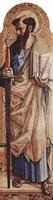
Saint Paul
Carlo Crivelli
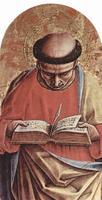
Saint Bartholomew
Carlo Crivelli
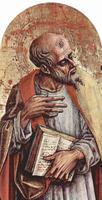
Apostles
Carlo Crivelli
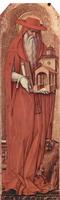
Saint Jerome
Carlo Crivelli
St. Augustine
Antonello da Messina
Hypocrates
Justus van Gent
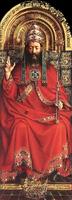
The Ghent Altarpiece, God Almighty (detail)
Jan van Eyck
St. Jerome in his Study
Domenico Ghirlandaio
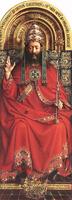
The Ghent Altar (detail)
Jan van Eyck
Saints Eligius and Antonio
Luca Signorelli
Solon
Justus van Gent
Saints John the Evangelist and Lawrence
Defendente Ferrari
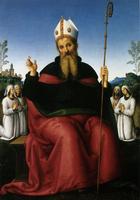
St. Augustine and four States of a fraternity
Pietro Perugino
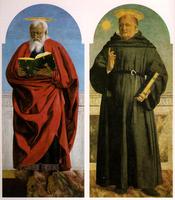
St. John the Evangelist and St. Nicholas of Tolentino
Piero della Francesca
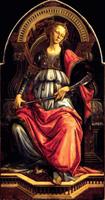
Fortitude
Sandro Botticelli
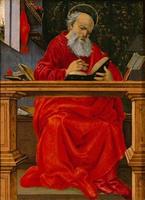
Saint Jerome in His Study
Filippino Lippi
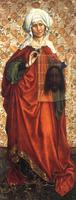
Saint Veronica Displaying the Sudarium
Robert Campin
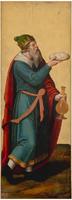
Melquisedec, Rey De Salem
Vicente Juan Masip