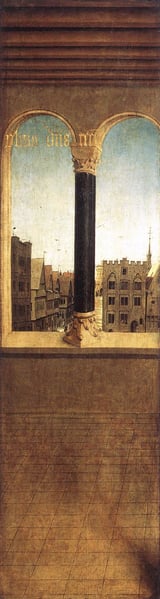
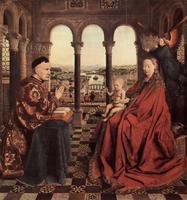
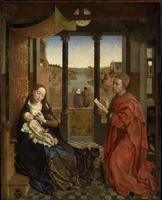
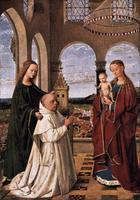
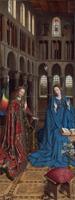
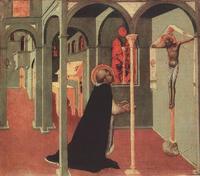
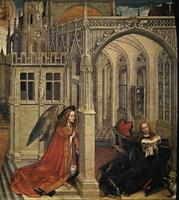
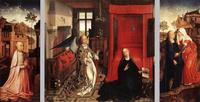
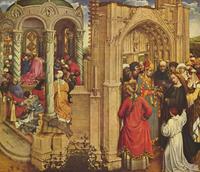
This detail from Jan van Eyck’s The Ghent Altarpiece is a landmark of the Northern Renaissance, particularly in its treatment of the cityscape genre. Painted with the revolutionary oil-glaze technique that van Eyck perfected, the view captures a meticulously observed urban environment—likely a stylized or idealized version of Ghent or Jerusalem—that functions both as a realistic backdrop and as a symbolic space. The significance lies in how van Eyck transforms a background element into a densely detailed, atmospheric scene that grounds the sacred narrative in tangible, earthly geography. Every window, roof, and tower is rendered with extraordinary precision, demonstrating the Northern Renaissance fascination with empirical observation and the spiritual value of material detail. This cityscape not only anchors the altarpiece’s theological themes (e.g., the Heavenly Jerusalem) but also asserts the artist’s ability to record the visible world as a testament to divine creation. It set a new standard for integrating architecture and landscape into religious painting, influencing generations of Northern European and later Flemish cityscape artists.