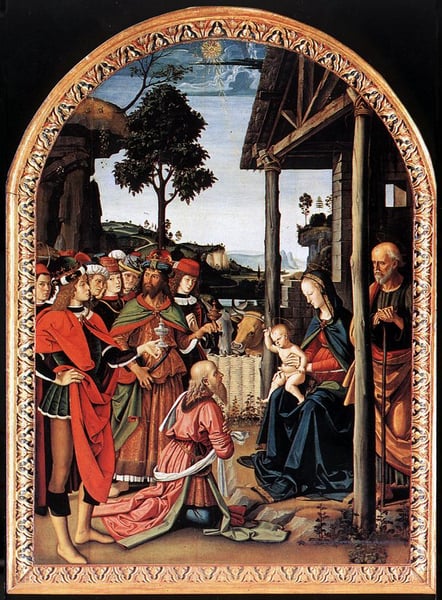
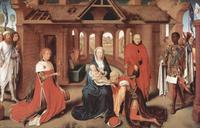
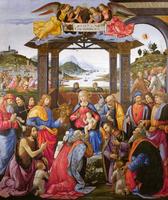
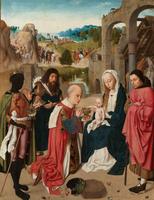
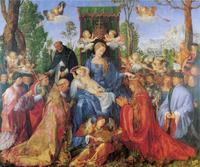
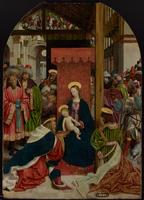
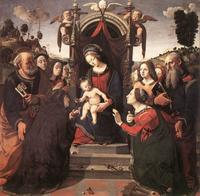
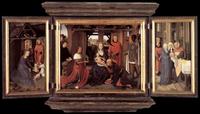
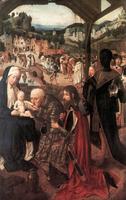
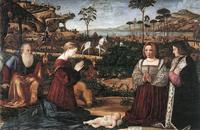
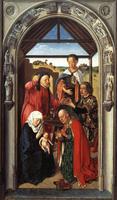
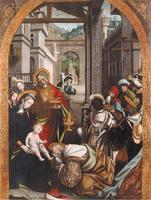
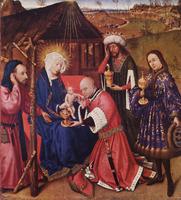
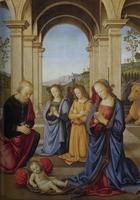
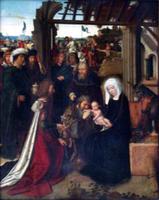
The "Adoration of the Kings (Epiphany)" by Pietro Perugino holds key significance within the Early Renaissance as a religious painting. Executed during a period when artists were refining naturalism, perspective, and narrative clarity, this work exemplifies Perugino’s mastery of balanced composition and serene, devotional atmosphere—hallmarks that would influence later masters such as his pupil Raphael. The painting’s importance lies in how it synthesizes the era’s shift toward humanized spirituality: the Holy Family and the Magi are arranged in a harmonious, geometrically ordered space, with gentle landscapes and soft, unified lighting that convey both earthly dignity and divine grace. This approach made the biblical scene accessible and contemplative for viewers, reinforcing the Early Renaissance ideal of art as a vehicle for clear, uplifting religious storytelling.