Pietro Perugino の The Almighty with Prophets and Sybils (detail 2) の専門的な分析
スタイル:High Renaissance · ジャンル:religious painting
Expert Analysis: "The Almighty with Prophets and Sybils (detail 2)" by Pietro Perugino
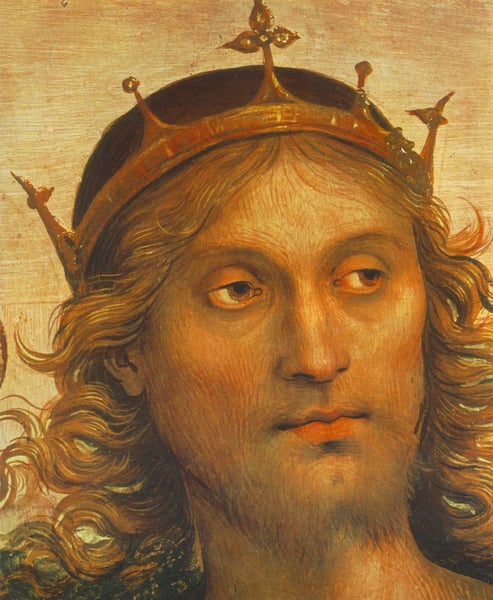
Pietro Perugino’s The Almighty with Prophets and Sybils (detail 2) is a masterful example of High Renaissance religious painting, a style defined by its pursuit of harmony, clarity, and idealized beauty. As a detail from a larger work—most likely a fresco or altarpiece—this fragment encapsulates Perugino’s signature approach: serene, balanced compositions that convey divine order with human tenderness.
Significance within the High Renaissance
Perugino was a pivotal figure in the transition from the Early to the High Renaissance, and his work directly influenced his most famous pupil, Raphael. What makes this particular detail significant is its demonstration of two core High Renaissance principles:
-
Balanced Composition and Spatial Clarity – Even in close-up, the arrangement of figures—likely prophets and sibyls (pagan prophetesses adopted into Christian iconography)—reflects Perugino’s gift for symmetrical, orderly groupings. The use of a centralized "Almighty" figure (God the Father or Christ in Majesty) establishes a clear focal point, while the surrounding prophets and sibyls create a rhythmic, processional effect. This clarity of organization was revolutionary: it allowed viewers to absorb complex theological narratives through visual logic rather than dense symbolism.
-
Idealized Serenity and Grace – Perugino’s figures are known for their soft, sweet expressions and gently tilted heads, a style that became synonymous with the High Renaissance ideal. In this detail, the prophets and sibyls embody a calm, introspective piety, their gestures restrained and their drapery falling in smooth, weightless folds. This serenity was not merely aesthetic; it reflected the era’s belief that divine truth could be expressed through perfect, harmonious forms. Perugino’s atmospheric sfumato (subtle blending of light and shadow) further unifies the scene, softening contours and creating a sense of ethereal stillness.
Genre and Iconographic Importance
As a religious painting, the work merges Old Testament prophets (e.g., Isaiah, Jeremiah) with classical sibyls (e.g., the Cumaean Sibyl), a Janus-like pairing popular in Renaissance art to show that both Jewish prophecy and pagan wisdom foretold Christ’s coming. This intellectual synthesis—Christianity embracing classical antiquity—is a hallmark of the High Renaissance humanist project. Perugino treats both groups with equal dignity, reinforcing the universal message of salvation.
Legacy
This detail is a testament to Perugino’s influence on the next generation. Raphael would later adopt his master’s graceful figure types and lucid compositions, notably in the Disputation of the Holy Sacrament and the School of Athens. Here, in The Almighty with Prophets and Sybils, we see the mature Perugino at his most confident: a painter who transformed devotional art into an experience of serene, transcendent order—a quiet but profound contribution to the High Renaissance.
視覚的に類似
構図やパレットが近い作品 20 件
The Almighty with Prophets and Sybils (detail 1)
Pietro Perugino
Procession of the Magus Balthazar (detail)
Benozzo Gozzoli
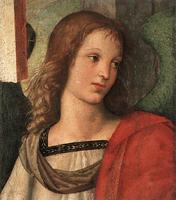
Angel (fragment of the Baronci altarpiece)
Raphael
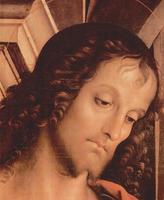
Madonna Enthroned with St. John the Tufer and St. Sebastian (detail)
Pietro Perugino
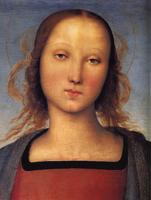
Madonna with Child (particular detail)
Pietro Perugino
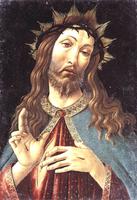
Christ Crowned with Thorns
Sandro Botticelli
Hans Tucher
Albrecht Durer
Santa Caterina
Antoniazzo Romano
The Artist as Christ
Samuel Palmer
Head of a Female Saint
Hans Holbein the Younger
Face a young girl with red beret
Albrecht Durer
Saint Sebastian
Giovanni Antonio Boltraffio
Portrait of a Man with the Medal of Cosimo
Sandro Botticelli
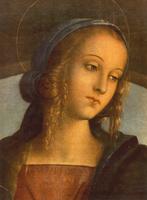
The Madonna between St. John the Baptist and St. Sebastian (detail 1)
Pietro Perugino
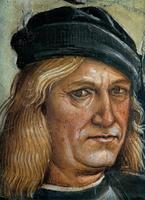
Self-portrait (detail from The Preaching and Acts of the Antichrist)
Luca Signorelli
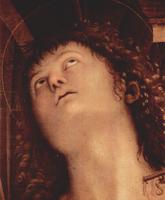
Madonna Enthroned with St. John the Tufer and St. Sebastian (detail)
Pietro Perugino
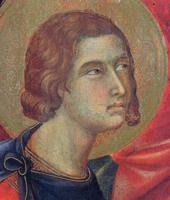
Madonna and Child on a throne (Front side fragment)
Duccio
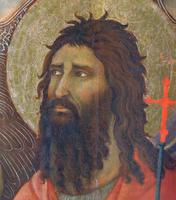
Madonna and Child on a throne (Front side fragment)
Duccio
Head of a Woman
Albrecht Durer
Head of a Male Saint
Hans Holbein the Younger