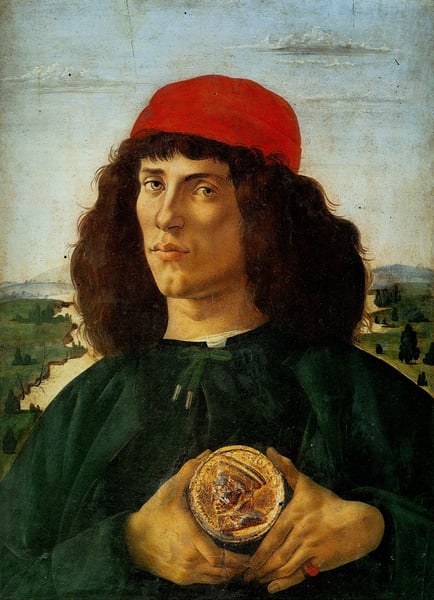
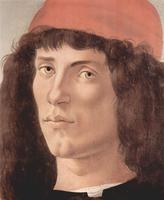
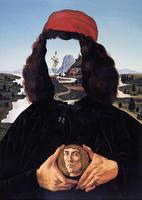
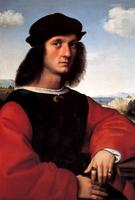
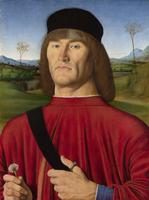
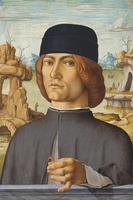
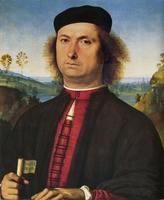
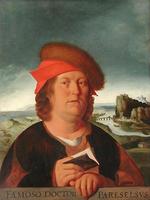
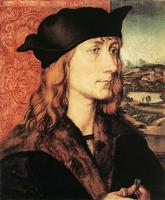
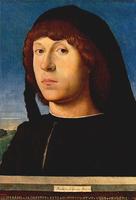
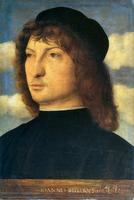
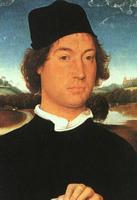
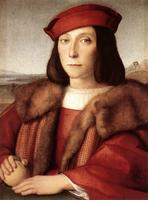
This early Renaissance portrait by Sandro Botticelli—categorized here as a religious painting—is significant primarily for its masterful fusion of secular portraiture with devotional symbolism, a hallmark of the period’s evolving artistic sensibility. The work depicts a young man in strict profile, a format that consciously echoes ancient Roman coins and medallions, thereby linking the sitter to classical ideals of virtue and authority. The medal itself, bearing the likeness of Cosimo de’ Medici (pater patriae), transforms the painting into a layered statement: it honors both the sitter’s personal identity and his allegiance to the Medici as a sacred dynasty, thereby elevating a political connection to a quasi-religious devotion. Botticelli’s meticulous rendering of textures—the crisp folds of the garment, the metallic gleam of the medal, the soft modeling of the face—demonstrates the Early Renaissance pursuit of naturalism while maintaining the iconic, almost hieratic stillness typical of religious panels. The painting’s significance lies in how it negotiates the boundary between earthly fame and spiritual grace: the sitter is presented not merely as a man of status but as a witness to a higher, Medici-sanctioned order, making this work a pivotal example of how portraiture began to absorb the solemnity and symbolic weight of religious imagery.