Expert Analysis:
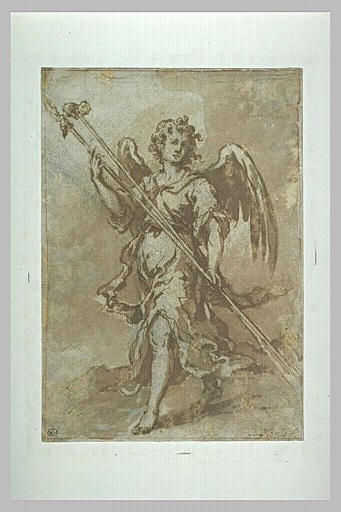
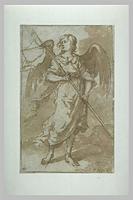
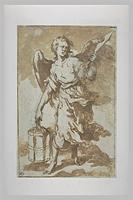
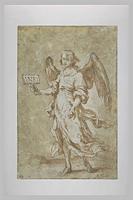
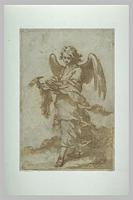
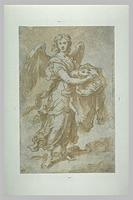
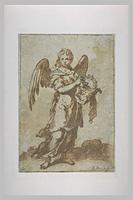
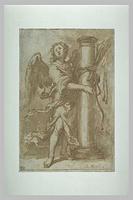
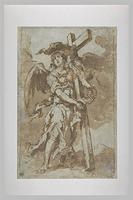
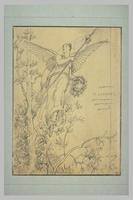
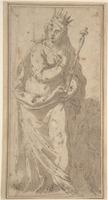
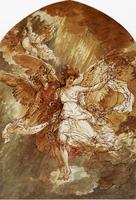
Bartolomé Esteban Murillo’s Angel holding the spear and sponge holder is a compelling example of Baroque religious painting, distinguished by its intimate, humanized treatment of a sacred subject. The work depicts a single angel bearing two instruments of Christ’s Passion—the spear that pierced His side and the sponge on a hyssop stalk offered to Him on the cross. In keeping with Baroque principles, Murillo likely employs dramatic chiaroscuro and soft, atmospheric light to heighten the emotional gravity of the scene, while the angel’s gentle, contemplative expression invites the viewer into a moment of devout reflection.
What makes this work significant within its style and period is how it exemplifies the Spanish Baroque’s shift toward accessible, tender piety. Rather than a grand, theatrical Passion scene, Murillo focuses on a solitary, ethereal figure—a device that emphasizes the human and divine intertwined, a hallmark of his mature religious works. The choice of angelic messenger and the specific, somber attributes (the spear and sponge) underscores the Counter-Reformation’s emphasis on meditation upon Christ’s suffering. Murillo’s ability to balance naturalism with spiritual grace here elevates a minor narrative detail into a potent devotional image, affirming his reputation as a master of Baroque religious sentiment.