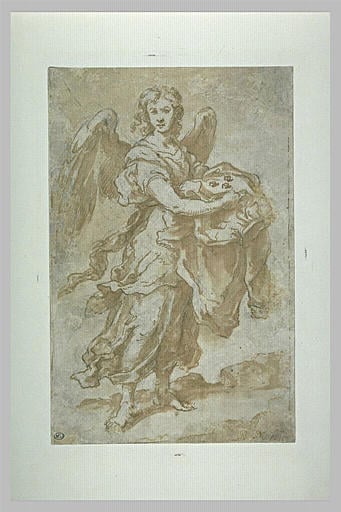
Analisi esperta di Angel holding the tunic and dice di Bartolome Esteban Murillo
Stile: Baroque · Genere: religious painting
Expert Analysis: "Angel holding the tunic and dice" by Bartolomé Esteban Murillo
In this religious painting, Murillo presents a poignant emblem of the Passion of Christ, rendered with the characteristic tenderness and refined naturalism of the Spanish Baroque. The composition centers on a single angel—often identified as a celestial attendant of the Passion—who solemnly displays the seamless tunic and the dice used by Roman soldiers to cast lots for Christ’s garments at the foot of the Cross (John 19:23-24). Murillo elevates this peripheral detail of the Crucifixion narrative into a focal point of quiet meditation, separating the objects from their brutal context and imbuing them with timeless symbolic weight.
Significance within the Baroque Style & Murillo’s Oeuvre:
-
Emotional Sublimation: Unlike the dramatic, high-contrast tenebrism of contemporaries like Zurbarán or the theatrical energy of Rubens, Murillo softens the subject. The angel’s downward gaze, graceful posture, and the creamy sfumato of the brushwork transform instruments of mockery into objects of devotion. This aligns with Murillo’s signature style—often called estilo vaporoso (vaporous style)—where light and shadow blend seamlessly to evoke an otherworldly, beatific calm.
-
Focus on Humble Objects: The painting is a masterclass in Baroque still-life within a religious framework. The tunic, rendered with rich, tactile folds, and the two white dice, set against the angel’s drapery, are depicted with exquisite attention to texture. By isolating these relics, Murillo invites the viewer to contemplate the human and material reality of Christ’s suffering—a key concern of Counter-Reformation piety, which sought to make sacred mysteries tangible and emotionally accessible.
-
Andalusian Sensibility: Murillo, working in Seville, specialized in a more intimate, accessible form of Baroque art. Here, the angel’s youthful, almost childlike face and the warm, golden-brown palette evoke a sense of protective sweetness, even as the subject recalls cruelty. This fusion of divine grace with everyday humanity is what makes the painting significant: it embodies the Spanish Baroque’s ability to find the sublime in the ordinary, turning a fragment of the Passion into a lasting symbol of redemption.
Conclusion: The work stands as a refined example of Murillo’s religious iconography, demonstrating how Baroque art could distill a chaotic Gospel scene into a single, contemplative moment. Its significance lies in its gentle, luminous treatment of a somber theme, offering viewers a direct, emotional encounter with faith through the quiet presence of an angel holding the remnants of Christ’s humiliation.
Museum / Gallery
Visivamente simili
20 opere con composizione e palette affini
Angel holding a hammer and nails
Bartolome Esteban Murillo
Angel Holding the Crown of Thorns
Bartolome Esteban Murillo
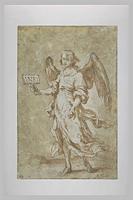
Angel holding registration
Bartolome Esteban Murillo
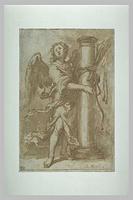
Angel with the instruments of whipping
Bartolome Esteban Murillo
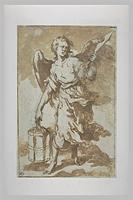
Angel holding the lantern and the sword that was used to cut the ear of Malchus
Bartolome Esteban Murillo
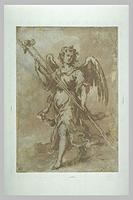
Angel holding the spear and sponge holder
Bartolome Esteban Murillo
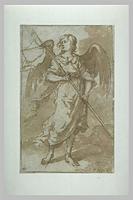
Angel holding a banner
Bartolome Esteban Murillo
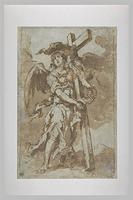
Angel Carrying the Cross
Bartolome Esteban Murillo
Angel of the Annunciation
Titian
Two Angels Singing
Benjamin West
Vedute di Roma
Giovanni Battista Piranesi
Flying Angel Mourning Victims of the Inquisition
Karl Bryullov
Judith
Hendrick Goltzius
Vision of a nun
Bartolome Esteban Murillo
The Immaculate Conception and heads outlined
Bartolome Esteban Murillo
Mercury Leading Geography
Giovanni Battista Gaulli
Angels, Guardian Angel
Palma il Giovane
Saint Catherine of Alexandria
Peter Paul Rubens
Drawing from the "Tarot" Prudence
Albrecht Durer
Juno
Palma il Giovane