Expert analysis of Bartolome Esteban Murillo’s The Immaculate Conception
Style: Baroque · Genre: religious painting
Expert Analysis of "The Immaculate Conception" by Bartolomé Esteban Murillo
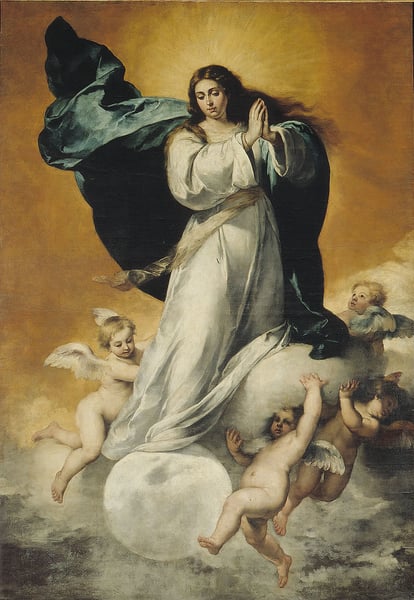
This work is a quintessential example of Spanish Baroque religious painting, yet it distinguishes itself through a remarkably serene and tender interpretation of a core Catholic doctrine. Murillo’s "The Immaculate Conception" is significant for the way it synthesizes the dramatic spiritual intensity of the Baroque with a soft, lyrical naturalism that became his hallmark.
In the context of the Baroque style—often defined by strong chiaroscuro, theatrical composition, and heightened emotionalism—Murillo’s approach is notably gentle. The Virgin Mary floats on a crescent moon, surrounded by a celestial glow and a host of putti (cherubic angels), her hands clasped in prayer and her eyes modestly downcast. Rather than emphasizing a narrative of triumph or conflict, Murillo focuses on purity, grace, and divine light. The composition is balanced and pyramidal, typical of Baroque order, but the handling is far softer: the brushwork is smooth, the colors are rich yet pastel (cobalt blue for her mantle, pure white for her tunic), and the light suffuses the scene without harsh shadows, creating an almost vision-like atmosphere.
The significance within the genre of religious painting lies in Murillo’s popularization of this specific iconography. During the 17th century, the doctrine of the Immaculate Conception (the belief that the Virgin Mary was conceived without original sin) was a subject of intense theological debate and devotion, particularly in Spain. Murillo painted numerous versions of this theme, and his treatment helped codify the visual representation: Mary as a young, humble girl, dressed in white and blue, standing on the moon, crowned with stars, and bathed in heavenly light. This was not merely a decorative image but a carefully constructed theological symbol. The crescent moon refers to the Woman of the Apocalypse (Revelation 12:1), while the white lily often carried by the angels (sometimes present in his versions) signifies her purity. The scene’s lack of earthly context places the viewer in a contemplative, otherworldly space, inviting direct spiritual empathy.
What makes "The Immaculate Conception" especially significant in the Baroque period is how it deviates from the movement’s often stormy emotionalism to achieve a quiet, mystical ecstasy. While contemporaries like Zurbarán favored starkness and Caravaggio preferred tenebrism, Murillo’s vision is luminous and accessible. This work became immensely influential, shaping the devotional image of the Virgin in Spain and Latin America for generations. It demonstrates that Baroque religious painting could be not only dramatic and persuasive but also tender and intimate, relying on beauty and gentle radiance to inspire faith.
Museum / Gallery
Visually similar
20 works with related composition and palette
The Assumption of the Virgin
Bartolome Esteban Murillo
The Aranjuez Immaculate Conception
Bartolome Esteban Murillo
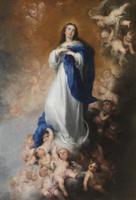
The Immaculate Conception of Los Venerables
Bartolomé Esteban Murillo
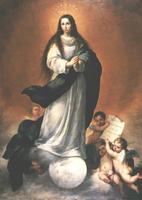
The Immaculate Conception
Bartolome Esteban Murillo
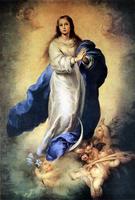
The Immaculate Conception
Bartolome Esteban Murillo
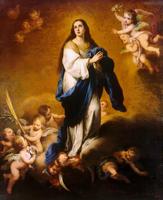
The Immaculate Conception (oil on canvas)
Bartolome Esteban Murillo
The Immaculate Conception
Giovanni Battista Tiepolo
Immaculate Conception
Jusepe de Ribera
The Ecstasy of Saint Mary Magdalen
Luca Giordano
Inmaculada
Francisco Preciado
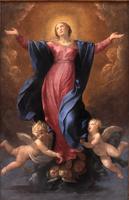
Assumption of the Virgin
Guido Reni
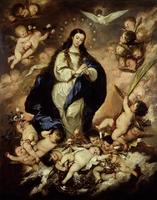
Immaculate
José Antolínez
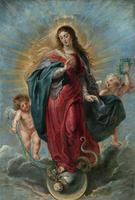
Immaculate Conception
Peter Paul Rubens
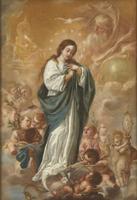
The imaculate conception
Juan de Valdes Leal
Assumption of Mary
Guido Reni
The Immaculate Conception
Claudio Coello
The Immaculate
Jusepe de Ribera
Assumption of the Virgin
Juan Carreno de Miranda
Imaculada Conceição
José Campeche
The Immaculate Conception
Bartolome Esteban Murillo