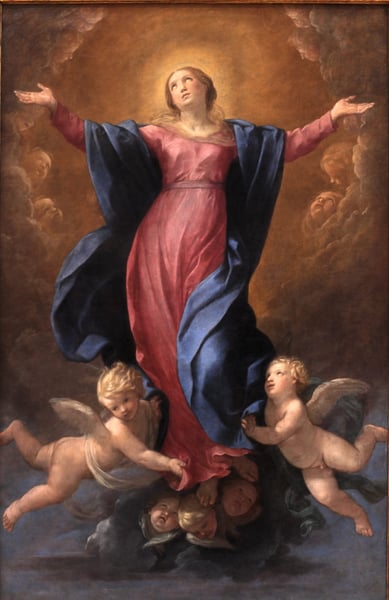
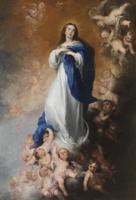
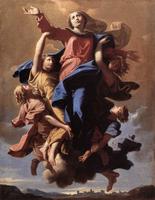
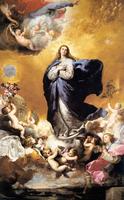
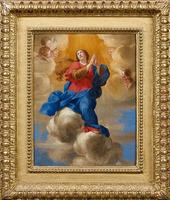
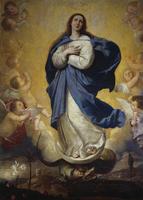
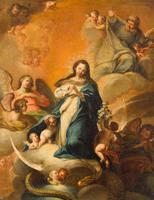
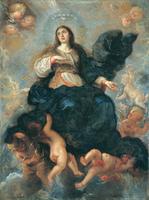
Guido Reni's Assumption of the Virgin is a quintessential example of Baroque religious painting, distinguished by its fusion of dynamic spiritual intensity with the idealized grace that Reni championed. As a Baroque work, it captures the dramatic moment of the Virgin's bodily ascent into heaven, employing the period's hallmark theatricality—sweeping diagonals, soaring figures, and a luminous, celestial light—to evoke divine transcendence. Yet Reni tempers the Baroque's typical emotional fervor with a refined classicism: the Virgin's serene posture and soft, harmonious palette (rather than stark chiaroscuro) emphasize a beatific, otherworldly calm. This synthesis makes the painting significant: it embodies the Counter-Reformation's call for accessible, emotionally compelling religious narratives while asserting Reni's personal style, which prioritizes elegance and clarity over the intense naturalism of contemporaries like Caravaggio. The work thus stands as a masterful bridge between Baroque drama and the classical tradition, reinforcing the genre's power to inspire devotion through sublime beauty.