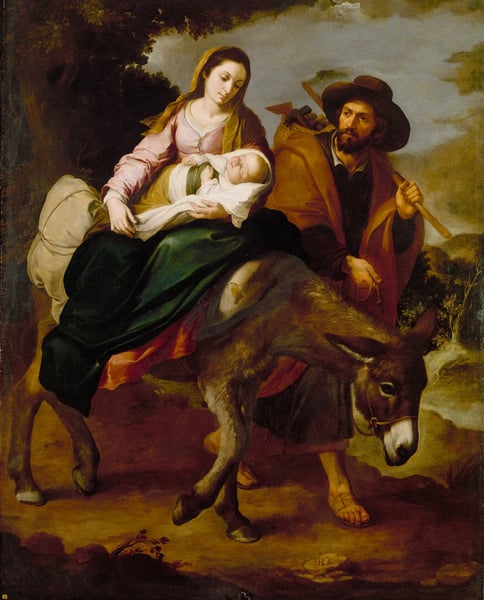
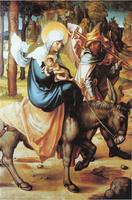
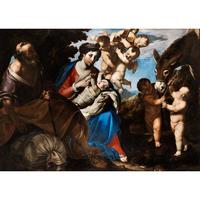
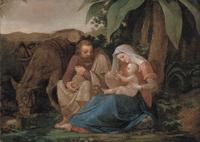
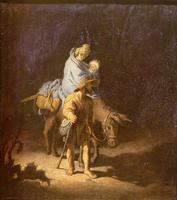
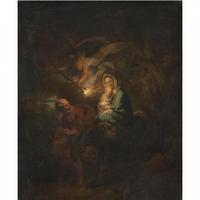
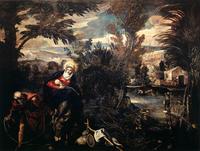
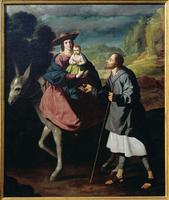
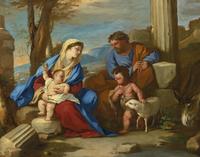
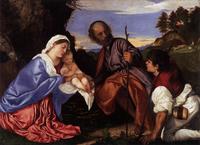
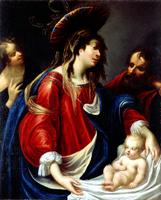
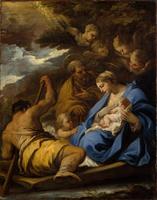
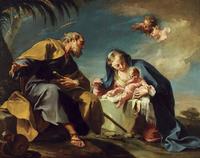
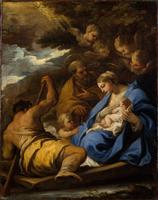
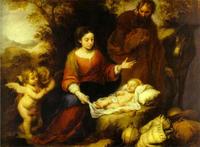
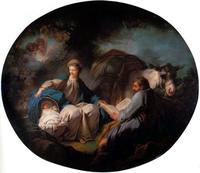
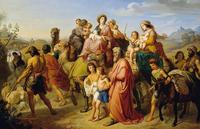
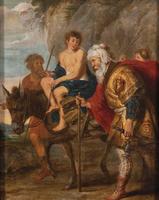
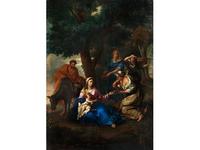
Based solely on the provided facts, the significance of The Flight into Egypt by Bartolome Esteban Murillo lies in its masterful synthesis of Baroque stylistic dynamism with the intimate emotional demands of its religious painting genre.
As a Baroque work, it likely employs the period’s characteristic dramatic contrasts of light and shadow (chiaroscuro) and a sense of movement to elevate the narrative. However, its significance is deepened by the genre: Murillo transforms a biblical flight—a story of fear and urgency—into a moment of serene, human devotion. This aligns with the Baroque era’s Counter-Reformation goal of making religious stories accessible and emotionally resonant. Murillo’s specific contribution is infusing this dramatic style with a tender, domestic tenderness, making the Holy Family relatable to ordinary viewers. The work thus bridges the grand, theatrical energy of the Baroque with the quiet, personal piety that defined Murillo’s most celebrated religious scenes.