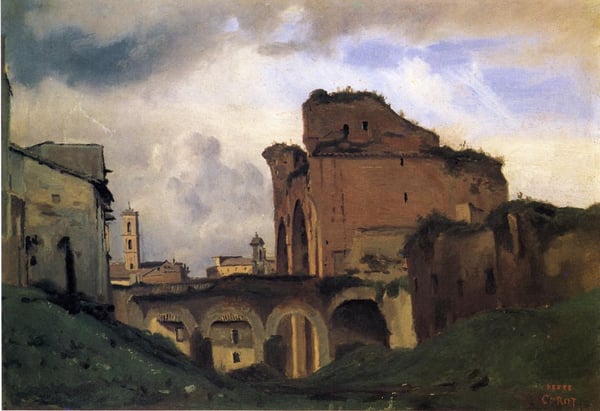
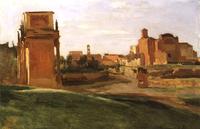
Expert Analysis: "Basilica of Constantine" by Camille Corot
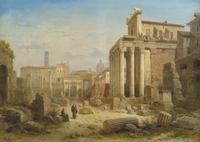
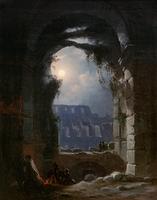
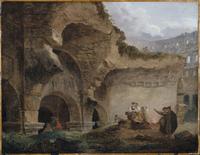
This work, executed by Camille Corot, is a cityscape that embodies the Romantic spirit through its engagement with the grandeur of antiquity. Corot, while often associated with a transitional blend of Neoclassical structure and Romantic sensibility, here channels the Romantic fascination with the sublime decay of ancient ruins.
The significance of "Basilica of Constantine" within Romanticism lies in its portrayal of architecture not as a static monument, but as a living relic imbued with atmosphere and historical pathos. Corot uses the cityscape genre to frame the vast scale of the basilica—a symbol of imperial power now weathered by time—inviting the viewer to contemplate the passage of eras and the melancholy of forgotten glory. His handling of light and shadow, typical of his early work, softens the stone and suggests a poetic, almost elegiac calm, elevating the scene from a mere topographical record to a meditation on transience. This aligns with Romanticism’s core drive: to evoke emotion and introspection through the encounter with the monumental past, making the painting a key example of how the movement transformed architectural subjects into vessels for feeling.