Analisi esperta di Island of San Bartolommeo di Camille Corot
Stile: Realism · Genere: cityscape
Expert Analysis: "Island of San Bartolommeo" by Camille Corot
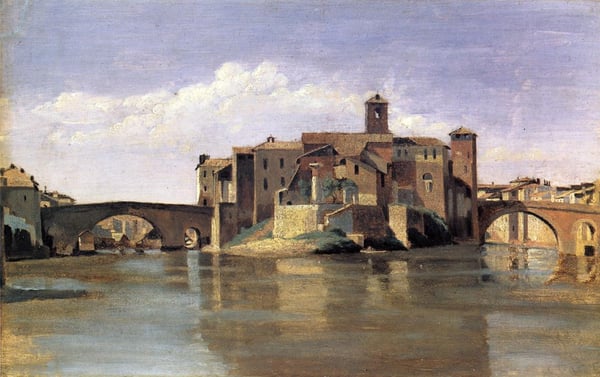
Camille Corot’s Island of San Bartolommeo is a quintessential example of early Realist cityscape painting, a work that demonstrates the artist’s pivotal role in transitioning from the idealized landscapes of Neoclassicism to the more direct, naturalistic observation that would define Realism and later influence the Impressionists. Though the artwork is a cityscape—a genre often associated with urban documentation—Corot infuses it with his signature poetic sensibility, balancing topographical accuracy with atmospheric subtlety.
Context and Significance within Romanticism/Realism
Corot, a central figure of the Barbizon school and a precursor to Realism, was renowned for his plein-air studies and his ability to capture the transient effects of light. Island of San Bartolommeo likely dates from one of his Italian journeys, where he sketched and painted Roman ruins and Tiber islands with a fresh, unidealized eye. At a time when cityscapes were often staged or heroicized, Corot’s approach was revolutionary: he treated the urban environment with the same reverence and careful tonal observation as a rural landscape. This work exemplifies the Realist commitment to portraying the world as it is, without mythological or dramatic embellishment.
Stylistic Analysis
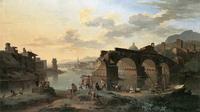
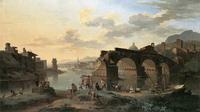
Corot employs a restrained, silvery palette of soft greens, grays, and ochres—a hallmark of his “mature” style. The composition is balanced yet natural: the island’s structures, possibly the church and monastery of San Bartolommeo, are rendered with soft, almost blurred edges, suggesting the haze of early morning or late afternoon light. His brushwork is loose but deliberate, capturing the texture of stone and foliage without over-defining details. This atmospheric perspective creates a sense of depth and air, inviting the viewer to experience the quiet, contemplative mood of the location. The sky, often a key element in Corot’s works, is luminous and subtly graded, anchoring the scene in a specific moment of daylight.
Significance to the Realist Movement
What makes Island of San Bartolommeo significant is its demonstration of Realism’s core principle: truth to visual experience. Corot avoids the dramatic chiaroscuro or theatrical sky of earlier landscape traditions; instead, he records the gentle, even light of a real place at a real time. The painting’s understated dignity—its refusal to sentimentalize or romanticize—was radical for its era. Furthermore, Corot’s handling of light and atmosphere would directly inspire the Impressionists, particularly in their focus on transient effects. Yet this work remains firmly grounded in the Realist credo: it is a lucid, unexaggerated portrait of a specific corner of the world, captured with profound sensitivity.
In sum, Island of San Bartolommeo is not merely a topographical record but a meditation on light, place, and perception. It stands as a testament to Corot’s ability to bridge the gap between the objective clarity of Realism and the emotive poetry of landscape, securing its place as a key work in the evolution of modern cityscape painting.
Museum / Gallery
Visivamente simili
20 opere con composizione e palette affini
Rome, the Basilica of Constantine
Camille Corot
The Tiber at dusk
Enrico Nardi
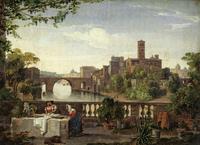
View of the Tiber Island in Rome
Franz Ludwig Catel
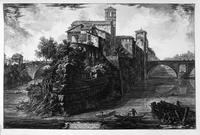
View of the Bridge Salary
Giovanni Battista Piranesi
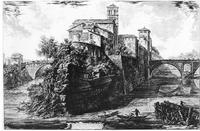
Vedute di Roma
Giovanni Battista Piranesi
The Old Bridge
Henri Martin
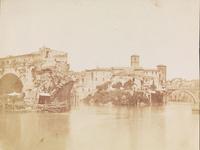
Pons Aemilius (Ponte Rotto), Rome
Giacomo Caneva
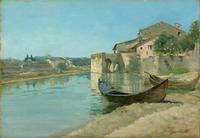
The Arno in Rovezzano
Odoardo Borrani
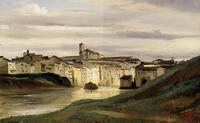
The goatherd of Genzano
Camille Corot
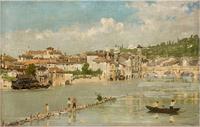
Sand fishermen
Angelo Dall'Oca Bianca
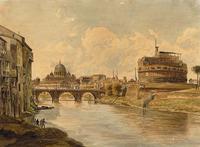
The Ponte Sant'Angelo and the Castel Sant'Angelo with St Peter's in the background
Rudolf von Alt
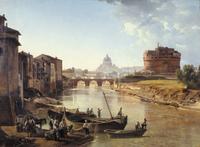
New Rome. Castel Sant'Angelo
Sylvester Shchedrin
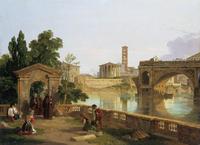
Tiber with the Temple of Hercules Victor, Santa Maria in Cosmedin and the Ponte Rotto seen from the Convent of San Barto
Penry Williams
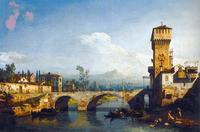
Capriccio Padovano
Bernardo Bellotto
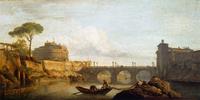
The Bridge and the Castel Sant'angelo in Rome
Claude-Joseph Vernet
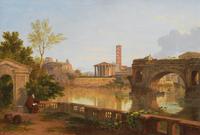
A View of Rome from the Tiber, with the Ponte Rotto and the Temple of Vesta
Penry Williams
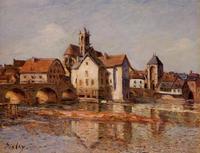
The Moret Bridge
Alfred Sisley
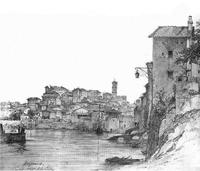
Rome in the Morning
Mikhail Lebedev
River View with the Ponte Rotto
Jakob de Heusch
River View with the Ponte Rotto
Jacob de Heusch