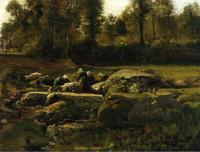
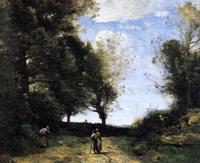
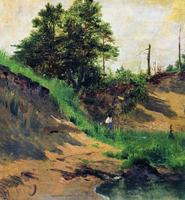
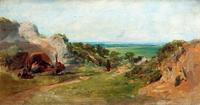
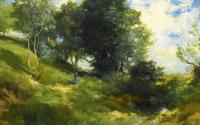
Expert Analysis: "Quarry of the Chaise Marie at Fontainebleau" by Camille Corot
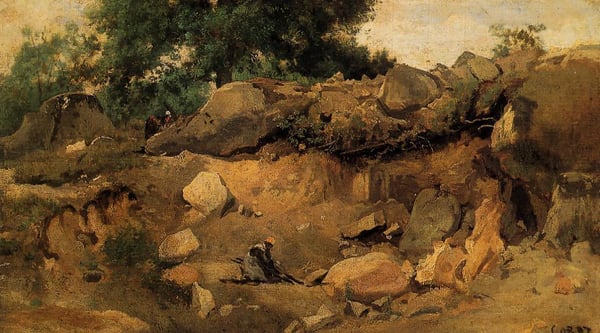
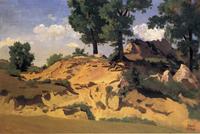
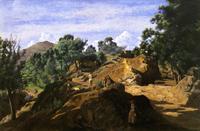
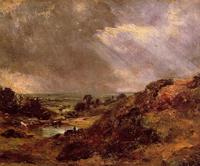
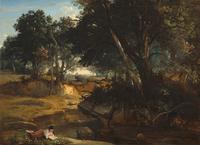
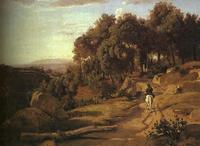
This painting exemplifies the Realist movement’s commitment to depicting unidealized, everyday scenes from nature and labor. Corot, working within the landscape genre, captures the rugged, working face of the Fontainebleau forest—a quarry, not a picturesque vista. The significance lies in its rejection of the polished, allegorical landscapes favored by earlier academic painting. Instead, Corot emphasizes the raw materiality of the site: the exposed rock faces, scattered boulders, and muted earth tones. The composition draws attention to the physical evidence of human extraction, subtly incorporating the quarrymen’s presence without romanticizing it.
As a Realist work, the painting is notable for its truth-to-nature approach. Corot’s brushwork is loose and descriptive, prioritizing atmosphere and light over detailed finish—a technique that presages later Impressionist concerns, yet remains firmly grounded in the Realist’s objective observation. The work’s significance also stems from its place within the Barbizon school’s broader mission: to document the French countryside as it was being transformed by industry and agriculture. Here, the quarry becomes a symbol of the coexistence of natural force and human labor, a theme that Realism championed over the idealized sublime.