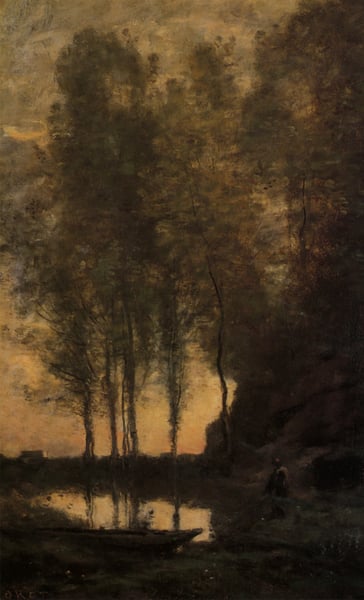
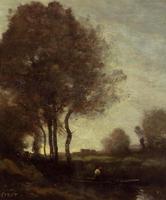
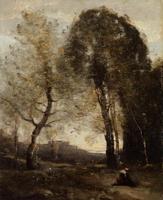
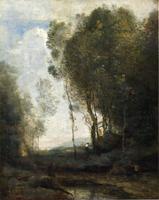
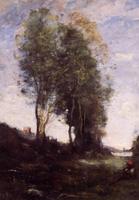
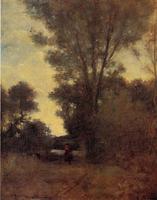
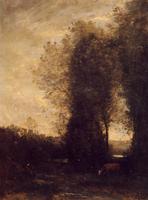
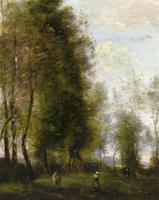
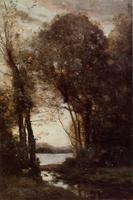
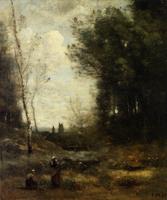
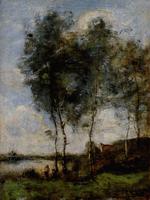
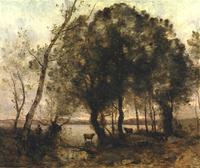
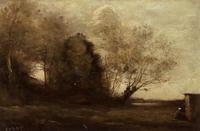
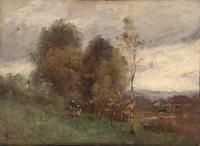
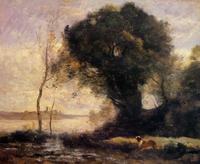
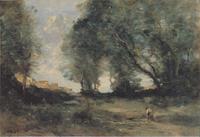
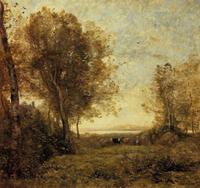
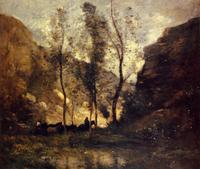
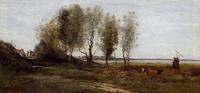
Camille Corot’s The Ferryman Tying his Boat stands as a masterful example of Realist landscape painting, marking a pivotal transition from the idealized, heroic landscapes of Neoclassicism toward a more truthful, unembellished observation of nature and everyday labor.
In this work, Corot treats the landscape not as a backdrop for myth or history, but as the primary subject itself—rooted in the unassuming reality of a ferryman performing a routine task. The artist’s commitment to Realism is evident in his careful attention to atmospheric effects and the quiet dignity of ordinary life: the soft, diffused light, the muted earthy tones, and the stillness of the water all convey a sense of serene authenticity. The ferryman, absorbed in his work, is integrated seamlessly into the natural environment, avoiding any heroic pose or narrative drama.
Significantly, Corot’s approach here influenced later Realists and even the Impressionists: his ability to capture the fleeting qualities of light and air, while maintaining a structured composition, demonstrates a balance between direct observation and formal harmony. The Ferryman Tying his Boat thus encapsulates the core of Realist landscape—a truthful, unidealized glimpse of the world as it is, elevating the mundane to the level of art.