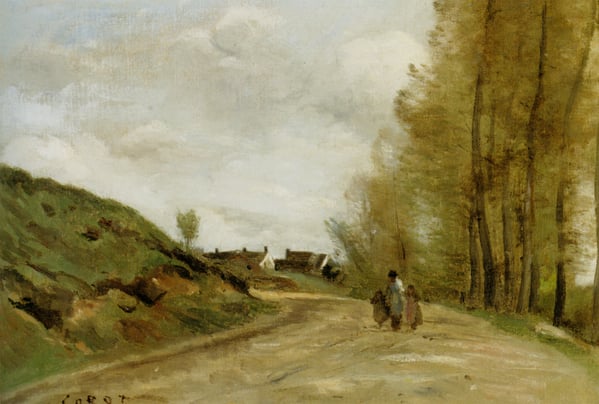
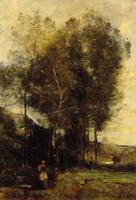
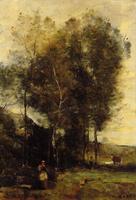
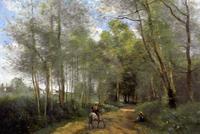
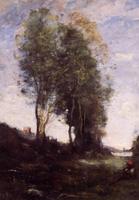
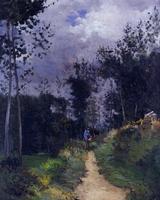
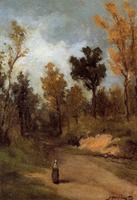
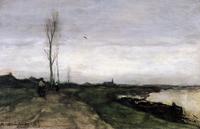
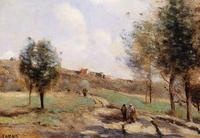
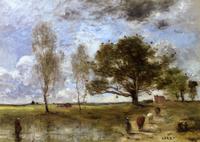
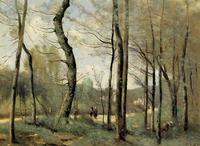
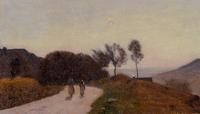
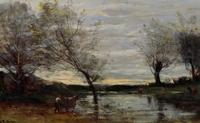
As an art historian analyzing "The Road in Gouvieux" by Camille Corot, the artwork is significant for its embodiment of the Realist movement within the landscape genre. While Corot is often recognized as a bridge to Impressionism, here the painting's core importance lies in its commitment to depicting a specific, unidealized rural scene—a road in the village of Gouvieux. This aligns with Realism's rejection of romanticized or mythological subject matter in favor of ordinary, everyday views. The work's significance rests on its straightforward, truthful representation of the natural world, capturing the quiet dignity of the French countryside without artificial embellishment. Such a focus on observed reality in landscape painting marks a key contribution to 19th-century art, steering away from academic conventions toward a more direct visual experience.