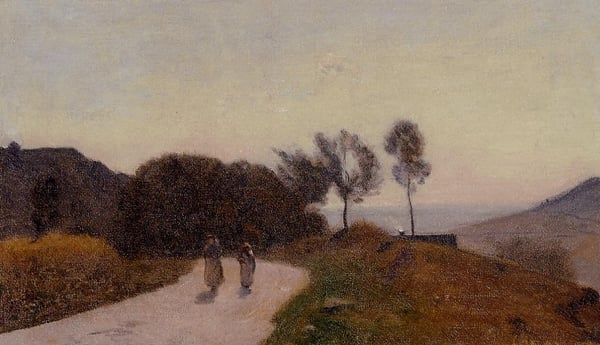
Expert Analysis: "A Road in the Countryside, Near Lake Leman" by Camille Corot
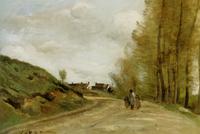
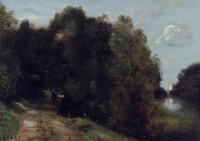
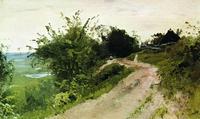
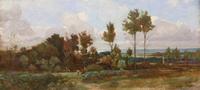
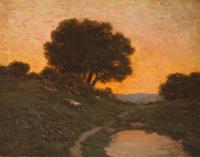
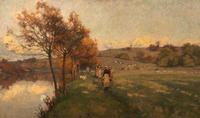
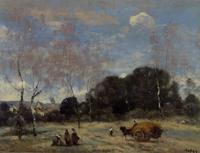
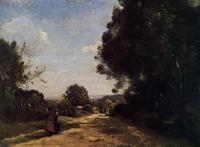
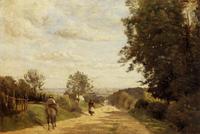
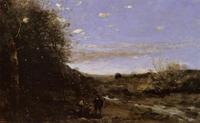
Camille Corot’s landscape exemplifies the Realist commitment to depicting nature with fidelity and unidealized truth. The work captures a specific, identifiable locale—the countryside near Lake Leman (Lake Geneva)—grounding the scene in a tangible geography rather than a generalized or romanticized vista. Corot achieves significance within the Realist movement by balancing meticulous observation with a subtle atmospheric harmony: the dirt road, framing trees, and distant water are rendered with sober, earthy tones and a quiet, compositional unity that avoids dramatic theatricality. This approach reflects Realism’s core tenet that even humble rural scenes possess dignity and artistic worth. Moreover, Corot’s handling of light and air—soft, diffused, and natural—anticipates the plein-air innovations that would later define Impressionism, making this landscape a pivotal bridge between the documented fact of Realism and the sensory immediacy of what followed. The work is significant for demonstrating how Realist landscape painting could elevate the ordinary into a studied, meditative truth.