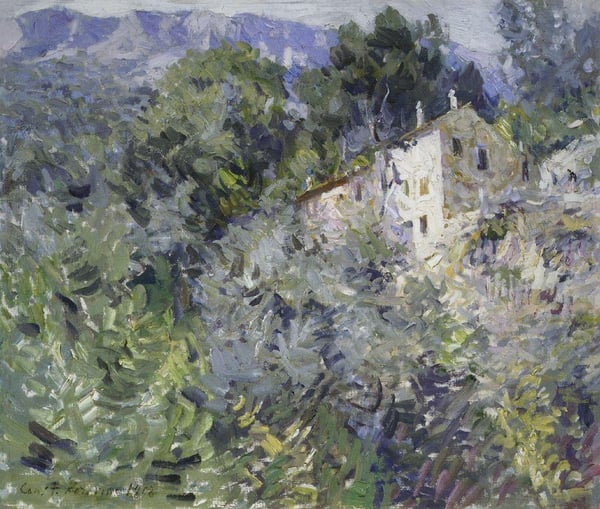
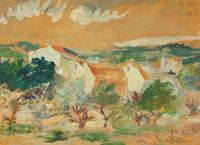
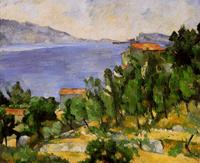
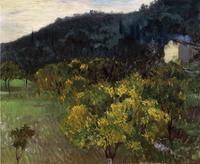
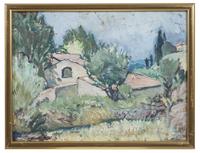
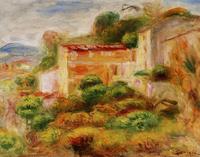
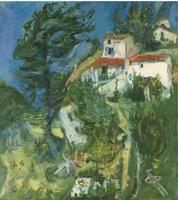
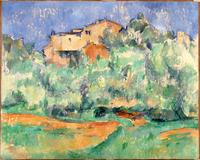
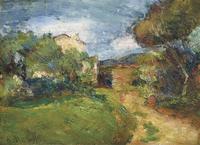
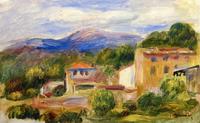
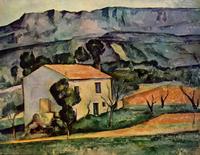
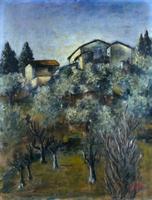
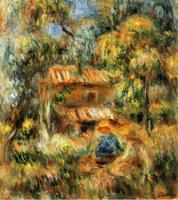
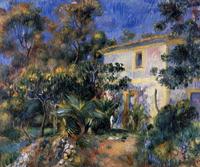
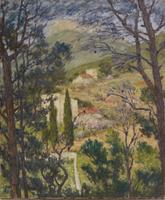
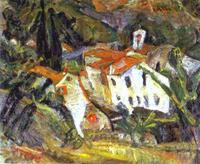
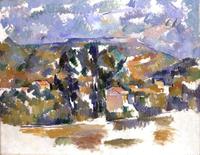
As an Impressionist landscape by Konstantin Korovin, "In the south of France" exemplifies the movement’s core pursuit of capturing fleeting atmospheric effects and the sensation of a specific moment. The work’s significance lies in its vivid embodiment of Impressionist principles: a luminous, high-key palette, broken brushwork that dissolves form into shimmering patches of color, and an emphasis on the transient qualities of natural light. The choice of the South of France as a subject reflects the Impressionist affinity for plein-air painting and sun-drenched, vibrant locales—a theme that allowed artists to explore the interaction of sunlight and shadow on water, foliage, and architecture. Within Korovin’s oeuvre, this piece demonstrates how Russian artists adapted the French style’s spontaneity and optical realism, synthesizing it with a lyrical, often warmer sensibility. The painting’s significance thus lies in its pure, unmediated sensory appeal: the viewer experiences the landscape as a lived, atmospheric encounter rather than a topographical record, which is the defining achievement of Impressionist landscape painting.