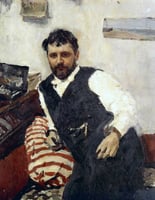
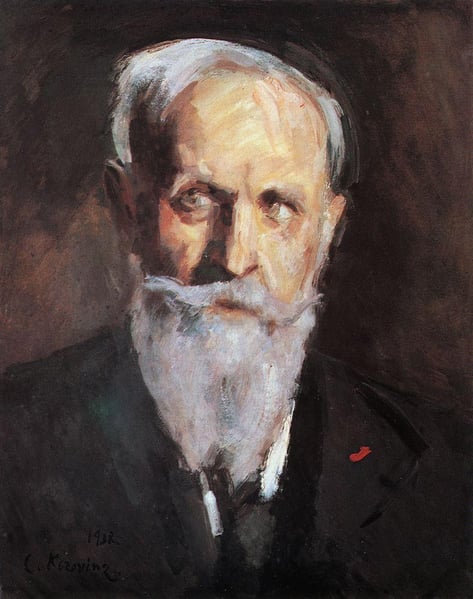
Konstantin Korovin sanatçısının Self-portrait eseri hakkında uzman analizi
Tarz: Impressionism · Tür: portrait, self-portrait
Expert Analysis of Konstantin Korovin’s Self-Portrait
Konstantin Korovin’s Self-Portrait stands as a quintessential example of Russian Impressionism, a movement that adapted the French emphasis on light, color, and spontaneity to a distinctly modern, introspective sensibility. As both subject and artist, Korovin uses the self-portrait genre not merely for documentation but as a vivid psychological and technical study.
Stylistic Significance within Impressionism
Rooted in the Impressionist tradition, the work prioritizes the fleeting perception of a moment—here, the artist’s own presence captured with rapid, visible brushstrokes. The palette is typically high-key, with cool shadows and warm highlights that model the face not through linear contours but through patches of color. Korovin’s handling of paint is deliberately loose, emphasizing the texture of the canvas and the physical act of painting itself. This technique aligns with the Impressionist goal of conveying the “impression” of a scene rather than a polished, academic likeness.
Genre and Self-Reflection
As a self-portrait, the work acquires a layered significance. Korovin presents himself not as a heroic or idealized figure, but as a working artist—direct, unsentimental, and immersed in his craft. The gaze is often direct, engaging the viewer while simultaneously suggesting the artist’s inner focus. This introspective quality distinguishes Korovin from his French contemporaries: while Monet or Renoir often dissolved the individual into atmosphere, Korovin’s self-portraits retain a psychological intimacy, bridging Impressionist technique with a Russian tradition of searching self-analysis that would later influence artists such as Chagall and the early modernists.
Contribution to Russian Impressionism
Korovin was a pivotal figure in bringing Impressionism to Russia. His Self-Portrait demonstrates how he assimilated the lessons of plein-air painting and color theory while infusing them with a personal, almost melancholic warmth typical of the Russian Silver Age. The work’s significance lies in its proof that Impressionism could be adapted to convey interior states—a vital step in the evolution of early 20th-century Russian art, moving beyond mere visual delight toward expressive depth.
In sum, Korovin’s Self-Portrait is significant as a masterwork that fuses the revolutionary optical freedom of Impressionism with an intimate, reflective portrait of the artist’s own psyche, marking a key moment in the cross-cultural reinterpretation of Modernist painting.
Görsel olarak benzer
İlişkili kompozisyon ve renk paletine sahip 20 eser
Sir (samuel) Luke Fildes
Luke Fildes
Federico Rubio y Gali
Alejandro Cabeza
John Butler Yeats
Robert Henri
Sir Thomas Martineau
Frank Holl
Portrait of the Wrighter D.Grigorovich
Konstantin Makovsky
Portret Malarza Ludomira Benedyktowicza
Leon Wyczółkowski
Portrait of the Art Critic Vladimir Stasov
Ilya Repin
Benito Pérez Galdós
Alejandro Cabeza
Joseph Dreyfus
Leon Bonnat
Sir Edward Packard
Frederick George Cotman
Self Portrait
Henri Martin
Portrait of Henri Lerolle
Pierre-Auguste Renoir
El Señor De Osacar
José Garnelo
Lord Ronald Sutherland Gower
Henry Scott Tuke
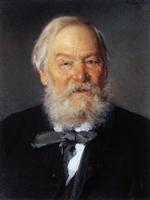
Portrait of Alexei Ivanovitch Strelkovsky
Vladimir Makovsky
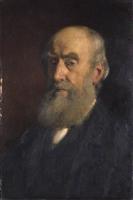
William Littlejohn, Bank Agent
Joseph Farquharson
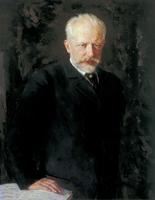
Portrait of the composer Pyotr Ilyich Tchaikovsky
Nikolai Kuznetsov
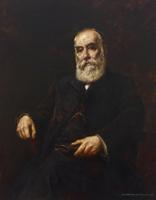
Sir Thomas Stevenson (1838–1908), lecturer in forensic medicine
Albert Chevallier Tayler
Portrait of I. E. Tsvetkov
Vladimir Makovsky
Portrait of the Surgeon Nikolay Pirogov
Ilya Repin