
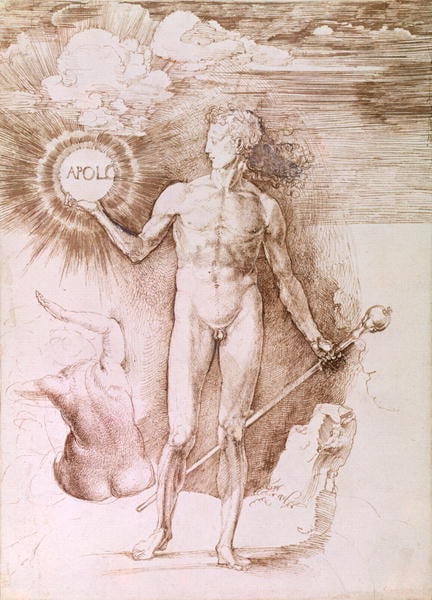
Albrecht Durer sanatçısının Apollo eseri hakkında uzman analizi
Tarz: Northern Renaissance · Tür: mythological painting
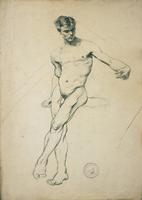
Based solely on the provided facts—that the work is “Apollo” by Albrecht Dürer, executed in the Northern Renaissance style and belonging to the mythological painting genre—its significance lies in how Dürer synthesizes classical humanist ideals with the meticulous observational precision of Northern European art.
Significance within the Northern Renaissance and mythological painting:
-
Fusion of Italian Renaissance Ideals with Northern Detail: During the Northern Renaissance, artists like Dürer were deeply influenced by the rediscovery of classical antiquity occurring in Italy. A mythological subject like Apollo—the god of light, music, and prophecy—was a quintessentially classical theme. Dürer’s treatment elevates this subject from mere illustration to a study of idealized human form and proportion, directly engaging with the Italian Renaissance’s focus on anatomy and perfect beauty. Yet, the work retains the characteristically Northern Renaissance attention to precise line, texture, and surface detail, marrying intellectual idealism with empirical observation.
-
Humanist Expression in a Northern Context: Mythological painting was a vehicle for humanist ideas, celebrating the human body and the intellectual heritage of the ancients. Dürer’s “Apollo” is significant because it demonstrates that Northern European artists could absorb and reinterpret classical mythology without merely copying Italian models. It asserts the Northern Renaissance’s capacity for sophisticated, learned subject matter, often tied to Dürer’s own studies of proportion and his printed works that disseminated these ideas across Europe.
-
Icon of the Artist as Thinker: Dürer was the first Northern artist to fully embrace the concept of the artist as a learned intellectual, not just a craftsman. By choosing Apollo—a deity associated with harmony, reason, and the arts—as his subject, Dürer aligns himself with these ideals. The painting thus becomes a statement on the elevated status of the artist and the intellectual ambition of Northern Renaissance art, bridging the gap between medieval craft traditions and the Renaissance cult of the individual genius.
In summary, this work is significant as a landmark of the Northern Renaissance’s engagement with classical mythology, demonstrating Dürer’s unique ability to blend Italianate humanist form with Northern technical rigor, thereby redefining the ambitions of painting in his region.
Museum / Gallery
Görsel olarak benzer
İlişkili kompozisyon ve renk paletine sahip 20 eser
Apollo with the Solar Disc
Albrecht Durer
Male Nude with a Glass and Snake (Asclepius)
Albrecht Durer
Male Nude
Jacopo Pontormo
Nude Study
Raphael
Five Male Nudes
Albrecht Durer
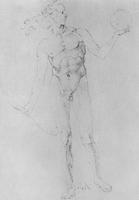
Male Nude(Apollo Poynter)
Albrecht Durer
Male nude with victory symbol in his hand
Marià Fortuny
Nude young man with spear
Marià Fortuny
Academic Male Nude
Pierre-Paul Prud'hon
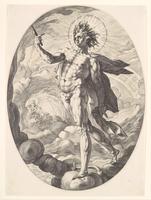
Apollo
Hendrick Goltzius
Männerakt
Charles-Andre van Loo (Carle van Loo)
The Risen Christ
Michelangelo
Adam and Eve
Albrecht Durer
Illustration to Milton`s Paradise Lost
William Blake
Study for a risen Christ
Michelangelo
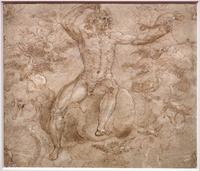
Allegoria Dell Aria
Maarten de Vos
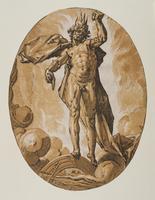
Helios
Hendrick Goltzius
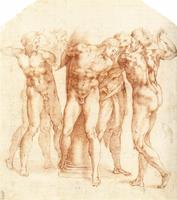
The Flagellation of Christ
Giulio Clovio
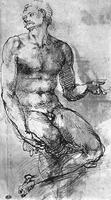
Study of nude man
Michelangelo
Study of a nude youth
Georgios Jakobides