Expertenanalyse zu Albrecht Durers Christ Taking Leave of his Mother
Stil: Northern Renaissance · Genre: religious painting
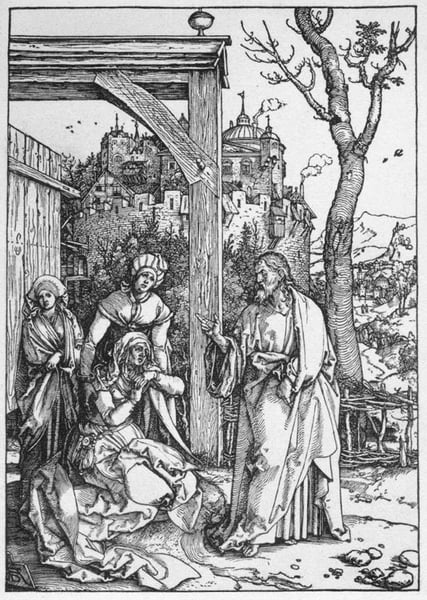
Albrecht Dürer’s Christ Taking Leave of his Mother is a quintessential work of the Northern Renaissance, a style renowned for its meticulous observation of nature, emotional restraint, and fusion of Gothic detail with humanist ideals. As a religious painting, it depicts a poignant, less commonly illustrated moment: Christ’s farewell to the Virgin Mary before His Passion. What makes this artwork significant lies in how it embodies the key innovations of its period and Dürer’s unique artistic voice.
First, the composition showcases Dürer’s mastery of naturalistic space and texture—a hallmark of Northern Renaissance art. The figures are set within a carefully rendered landscape, with distant hills, clouds, and foliage rendered in fine, almost scientific detail. This attention to the physical world grounds the sacred scene in a tangible reality, inviting viewers to contemplate the divine through the lens of observable nature. Dürer’s use of light and shadow (modeled through his signature hatching in prints, or here, likely in painting) gives the figures a sculptural presence, elevating the emotional weight of the moment.
Second, the emotional tone is restrained yet deeply human. Unlike the dramatic gestures found in much Italian Renaissance religious art, Dürer captures a quiet, intimate sorrow. Christ’s posture—facing forward but looking back at Mary—and Mary’s bowed head and folded hands convey a shared, dignified grief. This psychological depth reflects the Northern Renaissance’s focus on individual piety and the inner life, moving beyond mere iconography to explore the personal cost of salvation. The artist’s ability to convey complex emotion through subtle facial expressions and body language was groundbreaking for its time.
Finally, the subject choice itself is significant. The Farewell of Christ and His Mother was a theme popular in Northern devotional art, particularly in Germany, where it resonated with a culture of empathetic meditation on Christ’s suffering. Dürer treats it not as a static symbol but as a narrative moment, emphasizing the human bond between mother and son. This aligns with the Northern Renaissance’s integration of sacred and domestic spheres, making the divine accessible within a familiar emotional framework.
In the context of Dürer’s broader oeuvre, this work exemplifies his synthesis of Northern precision (inherited from artists like Martin Schongauer) with Italian compositional clarity (absorbed during his visits to Venice). The balanced arrangement, use of contrapposto in Christ’s stance, and atmospheric depth reveal Dürer’s role as a bridge between the Gothic tradition and the emerging Renaissance. Christ Taking Leave of his Mother stands as a testament to how Northern Renaissance art revolutionized religious painting: by infusing sacred history with unprecedented naturalism, emotional intimacy, and a profound sense of place.
Museum / Gallery
Visuell ähnlich
20 Werke mit ähnlicher Komposition und Farbpalette
Christ Taking Leave of His Mother
Albrecht Durer
The Adoration of the Magi
Albrecht Durer
The Rest during the flight to Egypt
Albrecht Durer
The Visitation
Albrecht Durer
Mary at the gate
Albrecht Durer
The Angel with the Key to the Bottomless Pit
Albrecht Durer
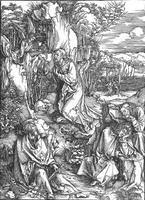
Christ on the Mount of Olives
Albrecht Durer
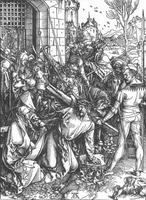
Christ Bearing the Cross
Albrecht Durer
Christ on the mount olive
Albrecht Durer
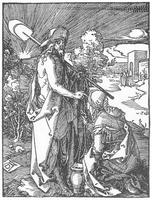
Christ Appears to Mary Magdalene
Albrecht Durer
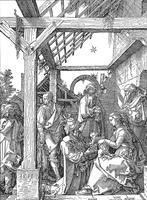
The Adoration of the Magi
Albrecht Durer
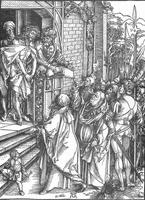
Ecce Homo
Albrecht Durer
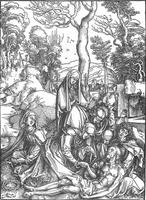
The Lamentation for Christ
Albrecht Durer
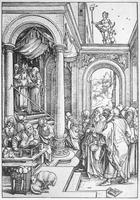
The Presentation of the Virgin in the Temple
Albrecht Durer
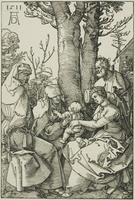
The Holy Family with Joachim and Saint Ann
Albrecht Durer
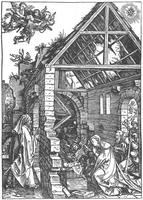
The Adoration of the Shepherds
Albrecht Durer
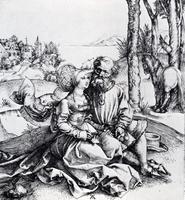
The Ill-Assorted Couple or the Offer of Love
Albrecht Durer
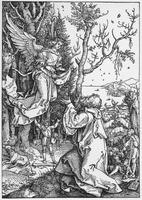
Joachim and the Angel from the 'Life of the Virgin'
Albrecht Durer
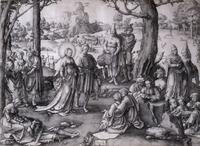
The Dance of Saint Mary Magdalene
Lucas van Leyden
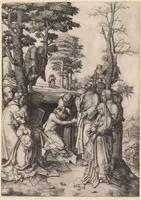
The Raising of Lazarus
Lucas van Leyden