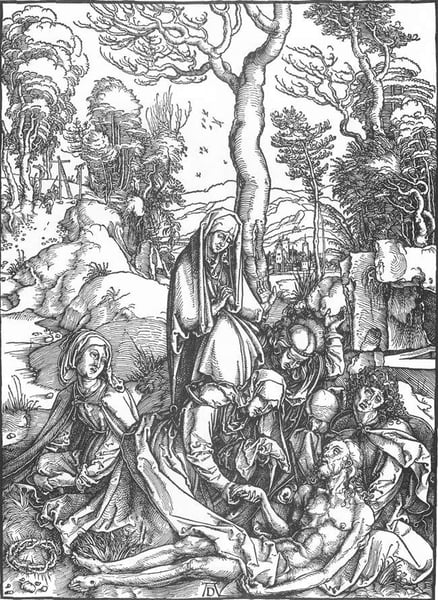
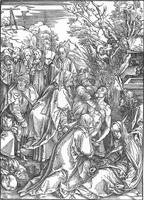
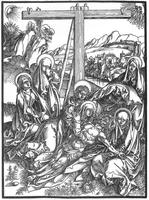
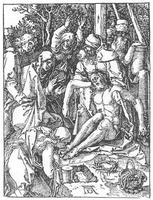
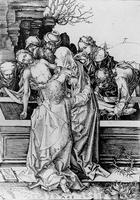
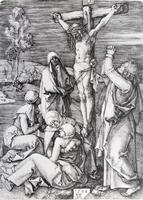
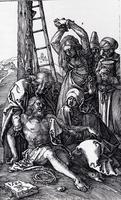
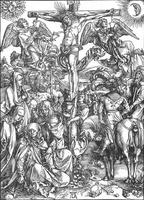
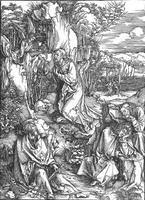
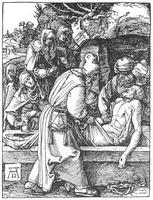
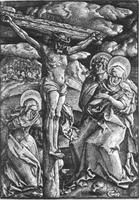
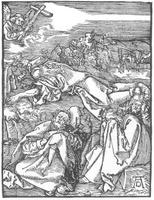
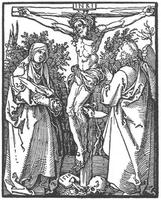
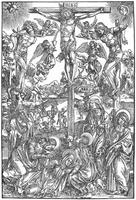
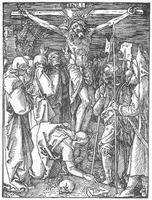
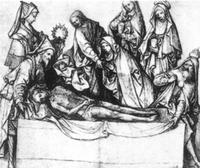
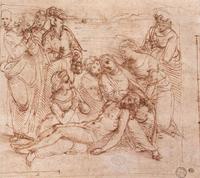
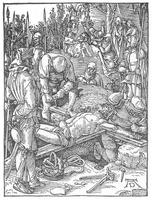
Albrecht Dürer’s The Lamentation for Christ stands as a defining example of the Northern Renaissance style within the religious painting genre. Its significance lies in how Dürer synthesizes the intense emotional realism of Northern European art with the compositional clarity and humanistic pathos of the Italian Renaissance. The work captures the moment of mourning after the Crucifixion, focusing not on the theological abstraction of salvation but on the raw, tangible grief of Mary, John, and the other figures. Dürer’s meticulous attention to detail—the textures of fabric, the anatomy of Christ’s lifeless body, and the landscape setting—embodies the Northern Renaissance’s emphasis on empirical observation. At the same time, the balanced arrangement of mourners and the use of gesture and facial expression convey a universal, deeply human sorrow that elevates the scene from mere illustration to a meditation on mortality and compassion. This fusion of Northern precision with Renaissance humanism marks the work as a pivotal bridge between medieval devotional imagery and the more naturalistic, individually expressive art of the early modern period.