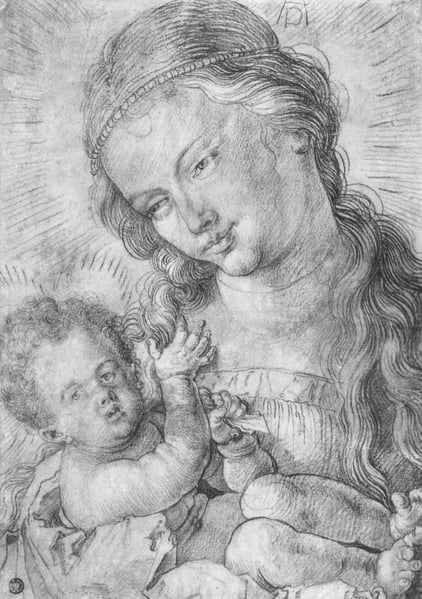
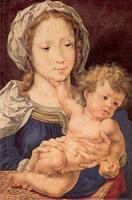
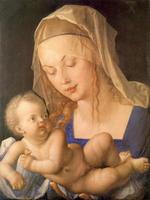
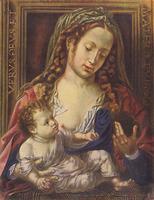
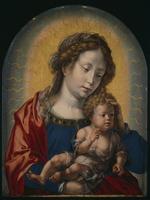
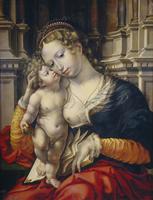
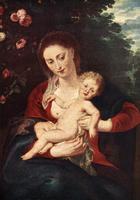
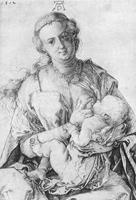
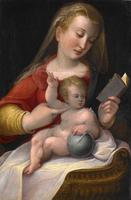
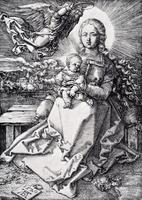
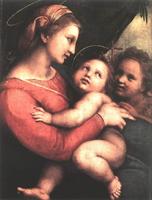
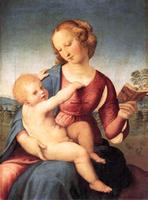
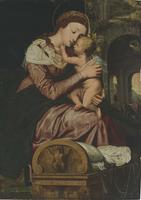
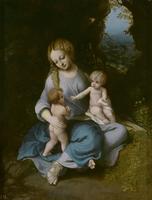
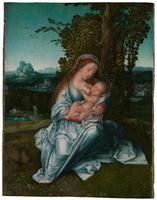
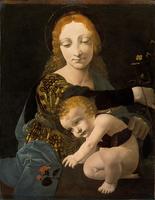
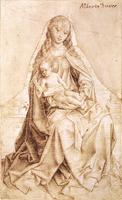
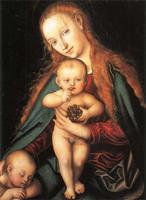
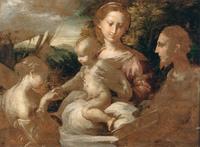
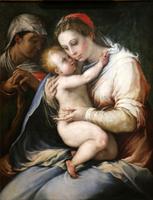
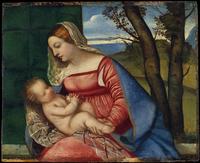
Albrecht Dürer’s Madonna and Child in Half Length is a quintessential example of the Northern Renaissance’s fusion of meticulous naturalism with intimate religious devotion. Painted in the religious genre, the work’s significance lies in its innovative compositional choice: the “half-length” format crops the figures closely, bringing the viewer into a direct, personal encounter with the Virgin and Christ Child. This framing, typical of Dürer’s interest in Italian Renaissance portraiture, is combined with the Northern tradition of extraordinary detail—visible in the texture of fabric, the soft modeling of flesh, and the psychological depth of the figures. The painting demonstrates Dürer’s mastery in translating the spiritual into the tangible, making the divine accessible through human tenderness and precise observation, a hallmark of Northern Renaissance art.