
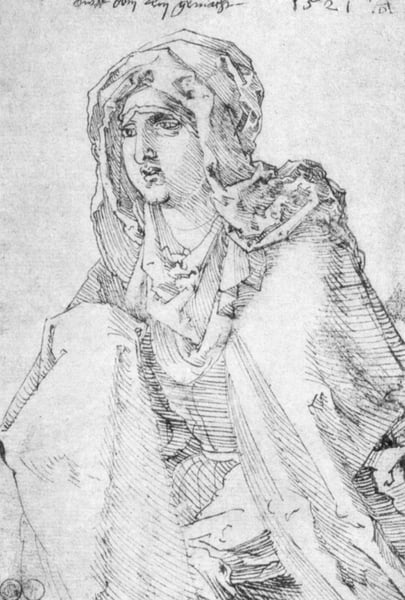
Analisi esperta di Maria di Albrecht Durer
Stile: Northern Renaissance · Genere: religious painting
Expert Analysis: "Maria" by Albrecht Dürer
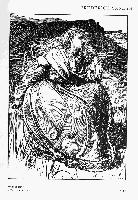
As a masterwork of the Northern Renaissance, Albrecht Dürer’s Maria—a devotional painting of the Virgin—represents a pivotal synthesis of Northern European precision and Italianate humanism. While the specific composition is not detailed here, Dürer’s approach to the Madonna consistently exemplifies his revolutionary ability to merge sacred tradition with naturalistic observation.
Significance within the Northern Renaissance:
- Technical virtuosity: Dürer brought the precision of his printmaking and drawing to oil painting, rendering every fold of fabric, strand of hair, and glint of light with microscopic fidelity. This reflects the Northern Renaissance obsession with verisimilitude—the belief that physical detail reveals divine truth.
- Psychological depth: Unlike earlier, more rigid Byzantine or Gothic icons, Dürer’s Mary often possesses a quiet, introspective humanity. Her downcast eyes or gentle smile suggest an intimate, approachable intercessor rather than a remote queen of heaven. This aligns with Northern emphasis on personal piety.
- Symbolic integration: Typical of Dürer, Maria likely weaves intricate Christian symbols (e.g., the lily, enclosed garden, or reflective globe) into a naturalistic scene. Each object carries layered meaning—a hallmark of Northern Renaissance iconography that invites the viewer into theological meditation.
- Fusion of influences: Dürer, who traveled to Italy and absorbed classical proportion and perspective, brings those ideals back to a Northern context. His Mary thus combines the volumetric, three-dimensional formality of Italian Renaissance Madonnas with the meticulous texture and domestic intimacy of Northern art. This synthesis defines Dürer’s unique place as a bridge between two great traditions.
- Medium and circulation: As a painting, Maria would have been intended for a private altarpiece or church commission, yet Dürer also disseminated Marian imagery through his renowned engravings (e.g., Madonna with the Monkey). His ability to translate similar compositions across media made his Virgin known across Europe.
Why this work matters: Dürer’s Maria is not merely a beautiful devotional image; it is a theological and artistic manifesto. It demonstrates that the sacred could be rendered with scientific accuracy without losing mystery, and that the everyday world—if observed with reverence—could become a window to the divine. For the Northern Renaissance, Dürer’s Virgins epitomize the era’s belief that art should instruct, inspire, and reveal the hand of God in creation itself.
Visivamente simili
20 opere con composizione e palette affini
The Virgin with the instruments of the passion
Rembrandt
Mary and John (Mary and John at the Foot of the Cross)
Hieronymus Bosch
Andromache and Astyanax
Pierre-Narcisse Guerin
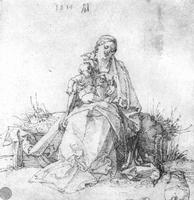
Madonna and child on the grassy bank
Albrecht Durer
Sheet Of Sketches With A Portrait Of Saskia
Rembrandt
Three female heads with one sleeping
Rembrandt
Until Her Death
Frederick Sandys
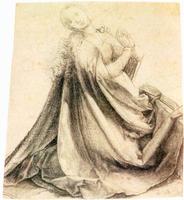
Virgin of the Annunciation
Matthias Grünewald
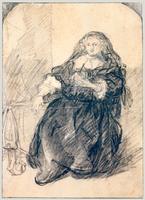
Seated Saskia with a letter in her left hand
Rembrandt
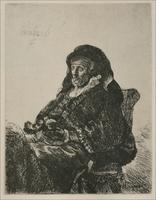
Rembrandt`s Mother in a Widow`s Dress
Rembrandt
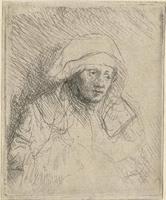
Sick woman with a large white headdress (Saskia)
Rembrandt
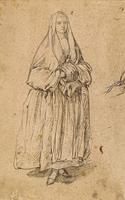
Standing Woman Holding a Muff Facing Right
Pietro Longhi
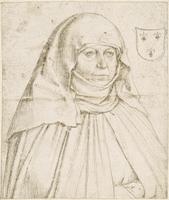
Bildnis Der Nonne Veronika Vetter
Hans Holbein the Elder
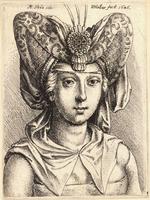
Woman with a turban
Martin Schongauer
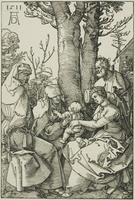
The Holy Family with Joachim and Saint Ann
Albrecht Durer
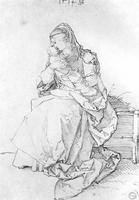
Mary with child wound on the grassy bank
Albrecht Durer
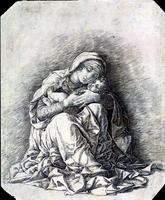
Virgin and Child (Madonna of Humility)
Andrea Mantegna
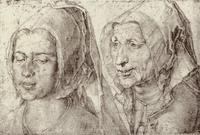
An Young and Old Woman from Bergen op Zoom
Albrecht Durer
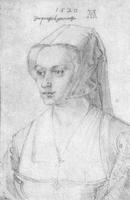
Portrait of a woman from Brussels
Albrecht Durer
The Sixties (The Agony)
Frederick Sandys