
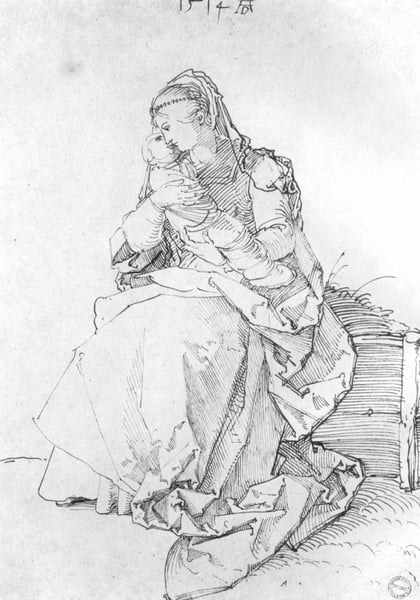
Albrecht Durer の Mary with child wound on the grassy bank の専門的な分析
スタイル:Northern Renaissance · ジャンル:religious painting
This analysis focuses on the artwork "Mary with Child on a Grassy Bank" by Albrecht Dürer, based solely on the provided facts: Northern Renaissance style and religious genre.
Expert Analysis:
Albrecht Dürer’s Mary with Child on a Grassy Bank is a seminal work of the Northern Renaissance that bridges the meticulous naturalism of Northern European painting with the humanistic ideals of the Italian Renaissance. The painting’s significance lies in three key areas:
-
Revolutionary Integration of Landscape and Sacred Subject:
Unlike earlier depictions of the Virgin and Child set against gold grounds or formal architectural thrones, Dürer places Mary and Jesus directly on a humble grassy bank. This naturalistic setting is not merely decorative; it is a theological statement. The detailed rendering of grasses, plants, and tiny flowers—a hallmark of Northern Renaissance precision—transforms the earth into a symbolic “Hortus Conclusus” (enclosed garden), a traditional metaphor for Mary’s purity. Dürer’s botanical accuracy elevates the scene from a simple landscape to a sacred paradise, making the divine feel immanent and accessible. -
Humanized Iconography with Northern Realism:
Mary is portrayed as a tender, maternal figure rather than an ethereal queen. Her gentle pose, the intimate way she supports the Christ Child, and the child’s playful, or perhaps solemn, interaction with her (likely referencing his future sacrifice through a “wound” or gesture) reflect the Northern Renaissance emphasis on emotional immediacy. Dürer’s masterful use of chiaroscuro and fine linework—whether in ink, watercolor, or engraving—gives the figures a sculptural weight while preserving the softness of flesh and fabric. -
Technical Virtuosity and Symbolic Detail:
The “grassy bank” itself becomes a microcosm of Dürer’s skill. Each blade of grass, each leaf is rendered with the precision of a botanist, yet arranged with the rhythm of a composer. This attention to the natural world was revolutionary for religious art at the time, foreshadowing the Northern tradition of embedding symbolic meaning in everyday objects. For example, specific plants (e.g., dandelion or strawberry) often carried Marian or Passion symbolism, though Dürer subordinates them to the overall contemplative mood.
In summary, this work is significant because it redefines the religious painting as a quiet domestic vision anchored in the natural world. It exemplifies Dürer’s ability to synthesize Italian Renaissance perspective and anatomy with Northern European detail and spirituality, creating an intimate masterpiece that feels both divinely ordained and deeply human.
Museum / Gallery
視覚的に類似
構図やパレットが近い作品 20 件
Madonna and child on the grassy bank
Albrecht Durer
Study sheet with Mary and Child
Albrecht Durer
Madonna On A Grassy Bench
Albrecht Durer
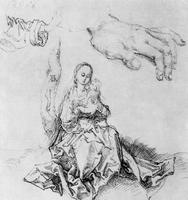
Study sheet with Madonna and child, hand and sleeve
Albrecht Durer
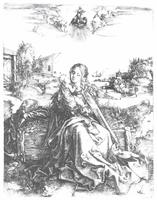
The holy family with the dragon fly
Albrecht Durer
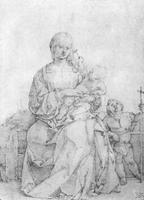
Madonna and Child with John the Baptist
Albrecht Durer
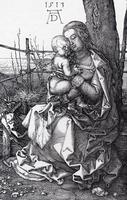
Madonna By The Tree
Albrecht Durer
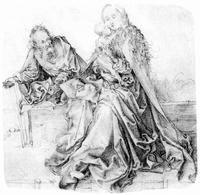
Rest on the Flight to Egypt
Albrecht Durer
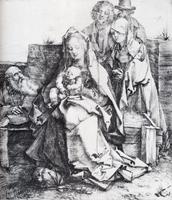
The Holy Family With St. John, The Magdalen And Nicodemus
Albrecht Durer
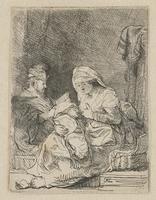
The holy family
Rembrandt
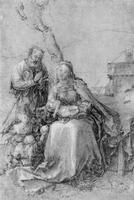
The Holy Family with angels under trees
Albrecht Durer
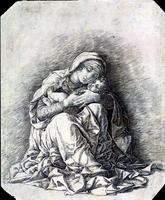
Virgin and Child (Madonna of Humility)
Andrea Mantegna
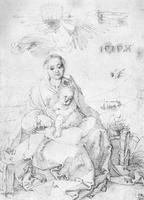
Madonna and child on the grassy bank
Albrecht Durer
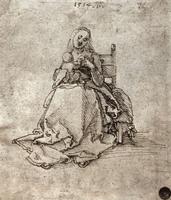
Madonna with the apple
Albrecht Durer
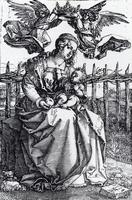
Madonna Crowned By Two Angels
Albrecht Durer
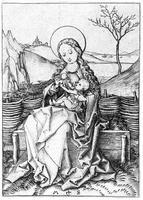
Madonna on the Turf Bench
Martin Schongauer
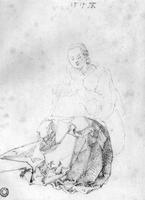
Madonna and Child
Albrecht Durer
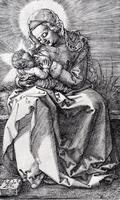
Madonna Nursing
Albrecht Durer
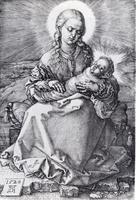
Madonna With The Swaddled Infant
Albrecht Durer
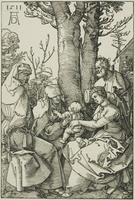
The Holy Family with Joachim and Saint Ann
Albrecht Durer