
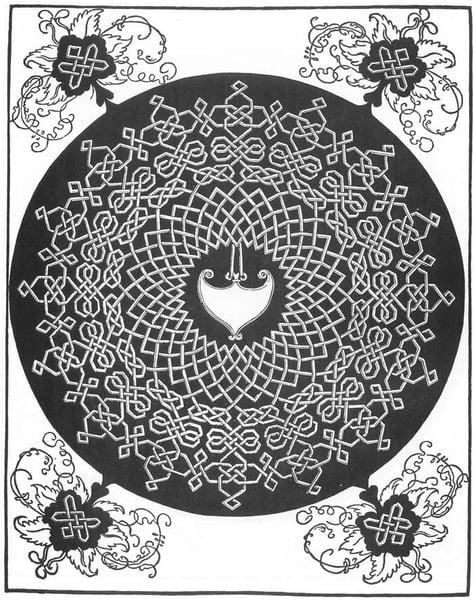
Expert analysis of Albrecht Durer’s Pattern from the Series of Six Knots
Style: Northern Renaissance · Genre: design
Expert Analysis: Pattern from the Series of Six Knots by Albrecht Dürer
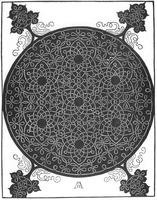
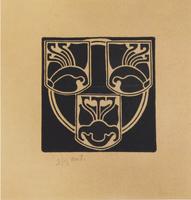
Albrecht Dürer’s Pattern from the Series of Six Knots stands as a remarkable testament to the Northern Renaissance’s embrace of mathematical precision, decorative invention, and technical virtuosity. Although the genre is explicitly labeled “design,” this work transcends mere ornament to become a sophisticated exploration of line, symmetry, and spatial illusion—qualities that mark Dürer as a bridge between late Gothic intricacy and Renaissance rationalism.
Significance within the Northern Renaissance:
- Mathematical Harmony and Islamic Influence: The interlacing geometric motifs in this series echo the knotwork patterns found in Islamic art, which Dürer encountered through Venetian intermediaries. By adapting these non-representational designs into a European print medium, he introduced a new vocabulary of abstract ornament that foregrounds order, repetition, and balance—principles central to Renaissance humanist thought.
- Mastery of Engraving: As a pioneering printmaker, Dürer exploited the burin’s precision to render hair-thin lines and seamless interlocking bands. The Six Knots demonstrate his ability to create complex, reversible visual puzzles where foreground and background shift ambiguously, engaging the viewer in a playful yet rigorous optical exercise.
- Elevating the Decorative: In the Northern Renaissance, “design” was not a minor category. Dürer’s knot patterns were likely intended as models for goldsmiths, embroiderers, or woodworkers, yet their publication as standalone prints elevated ornamental design to a fine art. They anticipate later Mannerist and Baroque grottesche and influenced decorative arts across Europe for generations.
What Makes This Work Significant:
The Pattern from the Series of Six Knots exemplifies Dürer’s unique synthesis of Northern attention to detail (the crisp, almost mechanical clarity of the interlace) with Southern Renaissance ideals of proportion and structure. It is a pure exercise in disegno—the intellectual foundation of art—where form exists for its own sake, freed from narrative or religious function. This makes it a key precursor to the concept of the autonomous decorative artwork, a milestone in the history of printmaking and design.
Museum / Gallery
Visually similar
20 works with related composition and palette
Third Knot
Albrecht Durer
Pattern from the Series of Six Knots
Albrecht Durer
Celtic Ornament no. 2. Interlaced styles
Owen Jones
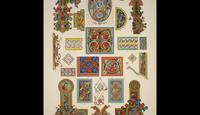
Celtic Ornament no. 3. Spiral, diagonal, zoomorphican and later Anglo-Saxon ornament
Owen Jones
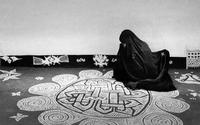
Woman drawing a mandana design, Rajasthan
Jyoti Bhatt
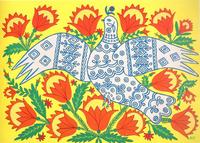
A Dove Has Spread Her Wings and Asks for Peace
Maria Primachenko
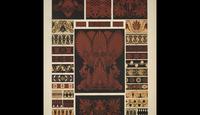
Greek no. 5. Ornaments from Greek and Etruscan vases
Owen Jones
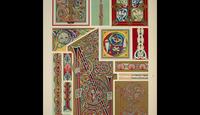
Medieval Ornament Illuminated Manuscripts no. 1. Portions of illuminated manuscripts of the twelfth and thirteenth centuries
Owen Jones
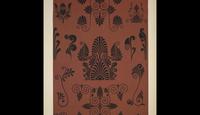
Greek no. 6. Ornaments from Greek and Etruscan vases
Owen Jones
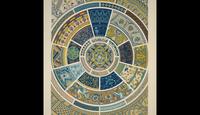
Renaissance Ornament no. 5. Ornaments from pottery at Marlborough House
Owen Jones
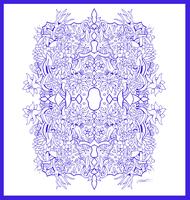
Kingdom Garden
Mihnea Cernat
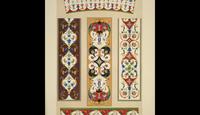
Italian Ornament no. 3. Ornaments from the Palazzo Ducale, and the Church of St. Andrea, Mantua
Owen Jones
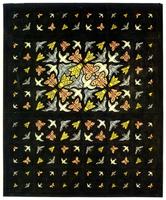
Prelim Drawing Ceiling Decoration for Philips_
M.C. Escher
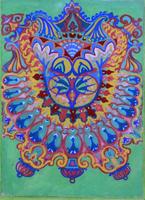
SICILIAN
Louis Wain
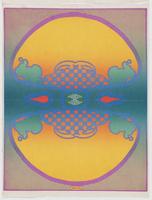
1 2 3 Infinity, The Contemporaries
Peter Max
Cartago Est
Douglas Abdell
Pattern from the Series of Six Knots
Albrecht Durer
Head
Eileen Agar
Butterfly Frog
Robert Zakanitch
Draft of the emblem by the Association of Austrian Artists Secession
Koloman Moser