
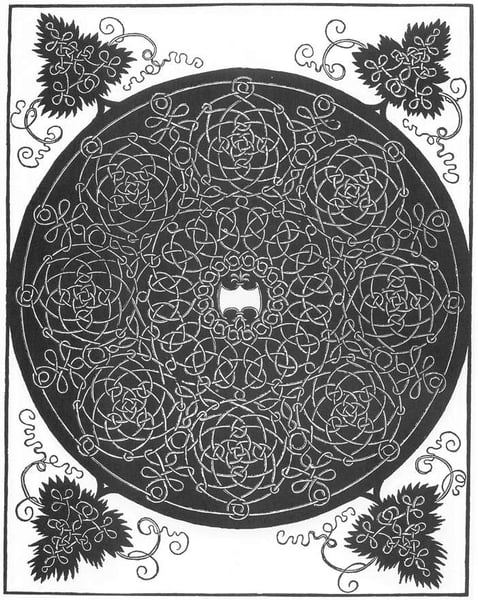
Expert analysis of Albrecht Durer’s Pattern from the Series of Six Knots
Style: Northern Renaissance · Genre: design
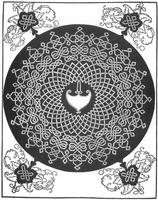
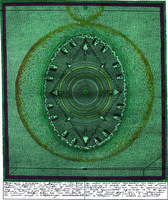
Expert Analysis of Pattern from the Series of Six Knots by Albrecht Dürer
Stylistic Context
This work belongs to the Northern Renaissance, a period renowned for its meticulous attention to detail, symbolic complexity, and the fusion of Gothic ornamentation with emerging humanist ideals. Dürer, as a master of this style, often elevated seemingly decorative works to intellectual exercises in geometry and perspective.
Genre Significance
Classified under the genre of design, this piece exemplifies the Northern Renaissance fascination with pattern, structure, and the mathematical underpinnings of beauty. Dürer’s Series of Six Knots are not merely ornamental; they serve as pictorial studies in interlacing, symmetry, and spatial illusion—themes that directly influenced later decorative arts and printmaking techniques.
What Makes It Significant
- Technical Mastery: Even as a design, Dürer applies the precision of a printmaker, rendering complex interwoven forms with clarity and balance. This demonstrates that the boundary between “fine art” and “applied design” was fluid in the Renaissance, with artists like Dürer treating patterns as serious intellectual compositions.
- Mathematical Harmony: The knot patterns reflect the Renaissance obsession with proportio divina (divine proportion) and geometric order. Dürer’s writings on measurement and perspective (e.g., Underweysung der Messung) show that such designs were deliberate exercises in visual harmony, not mere whimsy.
- Legacy in Print Culture: As a work intended for reproduction (likely as a woodcut or engraving), it underscores the role of print media in disseminating design innovations across Europe. The Six Knots became templates for craftsmen, influencing textiles, metalwork, and architectural ornament for generations.
In essence, this piece encapsulates how the Northern Renaissance transformed the humble “design” into a disciplined, theoretical art form—one that merged craft with intellectual ambition.
Museum / Gallery
Visually similar
20 works with related composition and palette
Pattern from the Series of Six Knots
Albrecht Durer
The Visionaries at the East Hampton Gallery
Peter Max
Kingdom Garden
Mihnea Cernat
1 2 3 Infinity, The Contemporaries
Peter Max
Path of Life III
M.C. Escher
Tablecloth
Maria Primachenko
In the House of Pompeii, upstairs portion of the short wall in the small courtyard of bathrooms
Giovanni Battista Piranesi
A Dark Cloud
Mihnea Cernat
Pattern from the Series of Six Knots
Albrecht Durer
Renaissance Ornament no. 5. Ornaments from pottery at Marlborough House
Owen Jones
Celtic Ornament no. 3. Spiral, diagonal, zoomorphican and later Anglo-Saxon ornament
Owen Jones
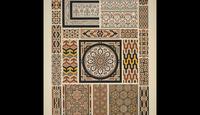
Arabian no. 5. Mosaics from walls and pavements from houses in Cairo
Owen Jones
Old French Fairy Tales
Virginia Frances Sterrett
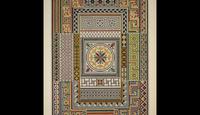
Pompeian no. 3. Mosaics from Pompeii and the museum at Naples
Owen Jones
Untitled
Antonio Asis
September. Fire
Oleksandr Aksinin
Green Glow
Robert Zakanitch
Circle of Signs. The Fourth 'Book of Schemes'. Album #1, the First Folder 1
Valerii Lamakh
Division
M.C. Escher
September. Water
Oleksandr Aksinin