
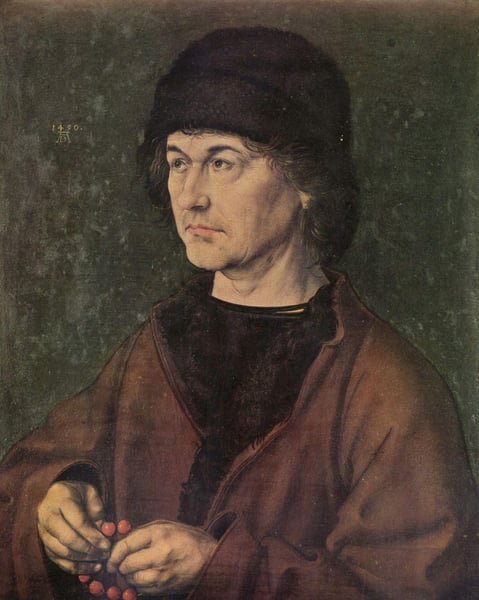
Expertenanalyse zu Albrecht Durers Portrait of Albrecht Dürer the Elder
Stil: Northern Renaissance · Genre: portrait
Expert Analysis: "Portrait of Albrecht Dürer the Elder" (1490) by Albrecht Dürer
This work stands as a seminal achievement of the Northern Renaissance, a period defined by an obsessive attention to naturalistic detail, symbolic depth, and the emerging primacy of individual identity. Dürer, already in his late teens when he painted this portrait of his father, demonstrates a breathtaking command of realism that would anchor his legacy as the first Northern artist to fully absorb Italian Renaissance principles while retaining a distinctly Germanic precision.
Technical and Stylistic Significance
- The painting exemplifies the Northern Renaissance’s hallmark microscopic detail: every wrinkle, furrow, and stray hair on the elder Dürer’s face is rendered with almost scientific accuracy. This reflects the period’s fascination with empirical observation, often linked to the rise of printmaking and humanist inquiry.
- Dürer’s use of oil paint allows for subtle gradations of light and texture, particularly in the skin’s weathered surface and the soft sheen of the fur collar—a technique borrowed from Flemish masters like Jan van Eyck, but applied with Dürer’s own linear discipline.
- The composition is rigorous yet intimate: a three-quarter view set against a dark, neutral background, directing full attention to the sitter’s face and hands. The elder Dürer’s hands, clasped in a gesture of quiet piety, reinforce the Northern tradition of embedding moral or spiritual meaning within domestic portraiture.
Historical and Personal Context
- This is one of the earliest true independent portrait paintings in Northern Europe—not a donor portrait within a religious scene, but a standalone study of an individual. It marks a shift from medieval typology to modern individualism, a core development of the Renaissance.
- As a portrait of the artist’s own father, it carries autobiographical weight. Albrecht Dürer the Elder was a goldsmith, and his son’s depiction honors his craftsmanship through the meticulous rendering of jewelry (the ring) and fabric. The inscription, “1490 / Albrecht Durer / the elder,” underscores a new consciousness of lineage and artistic legacy.
Significance within Dürer’s Oeuvre
- This work is a crucial precursor to Dürer’s later, more famous self-portraits and studies. It shows a young artist already capable of capturing character through physiognomic detail—the father’s guarded, weary expression hints at a life of labor, yet his steady gaze suggests resilience.
- The painting also bridges gothic tradition and renaissance humanism: the elongated, angular features recall late Gothic art, while the psychological depth and spatial realism anticipate Dürer’s transformative encounters with Italian art in the 1490s.
Conclusion
“Portrait of Albrecht Dürer the Elder” is not merely a familial homage; it is a manifesto of Northern Renaissance portraiture. Its fusion of empirical detail, emotional gravity, and technical virtuosity establishes Dürer as a pioneer of the modern portrait, elevating the genre from functional record to profound artistic statement.
Museum / Gallery
Visuell ähnlich
20 Werke mit ähnlicher Komposition und Farbpalette
Albrecht Durer's Father
Albrecht Durer
Portrait of a man
Jan Joest
Erasmus of Rotterdam
Hans Holbein the Younger
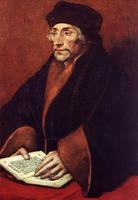
Portrait of Desiderius Erasmus
Hans Holbein the Younger
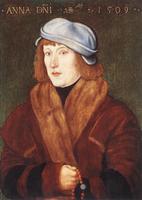
Portrait Of A Young man
Hans Baldung
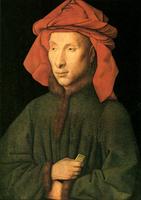
Portrait of Giovanni Arnolfini
Jan van Eyck
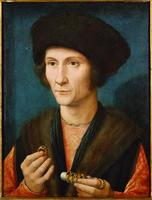
Portrait of a Goldsmith
Gerard David
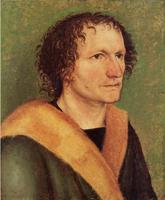
Male portrait before green base
Albrecht Durer
Philipp Melanchthon
Lucas Cranach the Elder
Portrait of a Man
Antonello da Messina
Self Portrait
Joos van Cleve
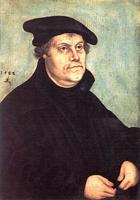
Portrait of Martin Luther
Lucas Cranach the Elder
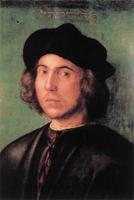
Portrait of a Young Man
Albrecht Durer
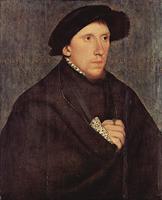
Henry Howard, Earl of Surrey
Hans Holbein the Younger
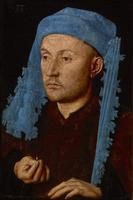
Man in a Blue Turban
Jan van Eyck
Portrait of a Man
Andrea Solario
Portrait of a Man
Dirk Bouts
Desiderius Erasmus
Hans Holbein the Younger
Portrait of Erasmus of Rotterdam Writing
Hans Holbein the Younger
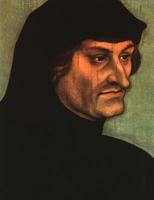
Portrait of Geiler von Kaiserberg
Lucas Cranach the Elder