
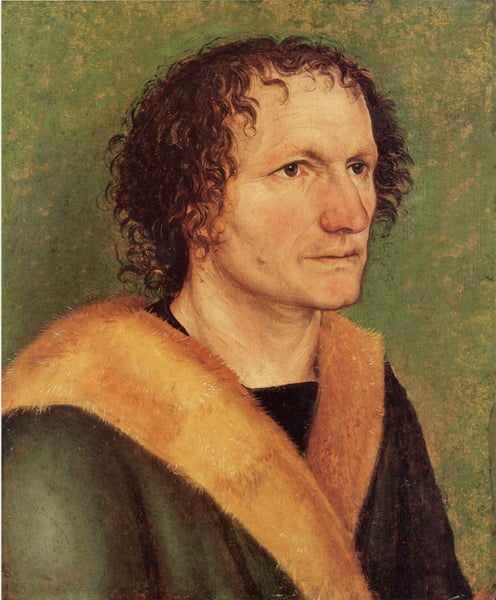
Analisi esperta di Male portrait before green base di Albrecht Durer
Stile: Northern Renaissance · Genere: portrait
Expert Analysis of "Male portrait before green base" by Albrecht Dürer
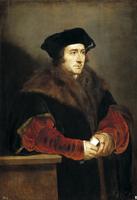
Albrecht Dürer’s Male portrait before green base exemplifies the Northern Renaissance’s revolutionary approach to portraiture, merging meticulous observation with symbolic depth. As one of the most influential artists of the era, Dürer elevated the portrait from a mere record of likeness to a profound study of individual character and humanist ideals.
Significance within the Northern Renaissance Style
The painting belongs to the Northern Renaissance, a period that prized empirical detail, rich texture, and psychological intensity. Dürer, trained in the workshop of Michael Wolgemut and deeply influenced by Italian Renaissance ideas during his travels, synthesized Northern precision with Southern compositional harmony. Here, the “green base” likely refers to a verdant background or a green-toned underpainting, a device that contrasts with the sitter’s flesh tones and draws attention to the face—a hallmark of Dürer’s ability to create spatial depth through color. The green may also carry symbolic overtones, such as life, renewal, or the transient nature of earthly existence, common themes in Northern Renaissance art.
Genre and Innovation in Portraiture
As a portrait, this work demonstrates Dürer’s mastery of capturing not just physical likeness but inner life. The sitter’s direct gaze, subtle modeling of the face, and careful rendering of hair and clothing align with Dürer’s known emphasis on individual identity and personal dignity. Unlike earlier medieval or Gothic portraits that often idealized or flattened their subjects, Dürer’s approach is unflinchingly human: every wrinkle, shadow, and texture reveals a person of substance. This psychological immediacy was groundbreaking and would influence generations of portraitists.
Technical Mastery
Though we lack specific details about the painting’s dimensions or medium, Dürer’s technique is universally celebrated. He often used fine brushwork and glazes to achieve luminous skin tones and rich chiaroscuro. The “green base” might indicate an innovative underpainting method that allowed him to build up layers of color, lending the portrait a vibrant, almost jewel-like quality typical of Northern Renaissance panel paintings.
Legacy
This work is significant as a testament to Dürer’s role in redefining portraiture during a pivotal cultural moment. It bridges the medieval and modern worlds, merging faith in observation with a celebration of the individual. Today, it stands as a vital example of how Northern Renaissance artists used the portrait to explore humanity’s place in the divine order, making it a key piece in understanding Dürer’s enduring influence on Western art.
Museum / Gallery
Visivamente simili
20 opere con composizione e palette affini
Portrait of a man
Jan Joest
Portrait of Albrecht Dürer the Elder
Albrecht Durer
Philipp Melanchthon
Lucas Cranach the Elder
Henry Howard, Earl of Surrey
Hans Holbein the Younger
Martin Luther
Lucas Cranach the Elder
Martin Luther
Lucas Cranach the Elder
Martin Luther
Lucas Cranach the Elder
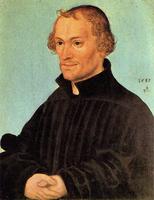
Philipp Melanchthon
Lucas Cranach the Elder
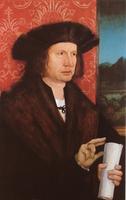
Portrait of Georg Tannstetter (Collimitius)
Bernhard Strigel
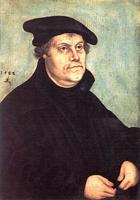
Portrait of Martin Luther
Lucas Cranach the Elder
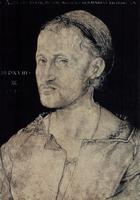
Hans the Elder Portrait Burgkmair
Albrecht Durer
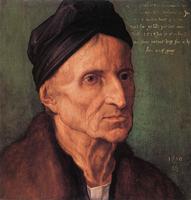
Portrait of Nuremberger Painter Michael Wolgemut
Albrecht Durer
Joachim I Nestor, Elector of Brandenburg
Lucas Cranach the Elder
Sir William Butts
Hans Holbein the Younger
Self Portrait
Joos van Cleve
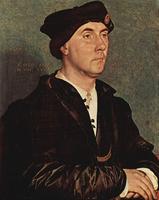
Portrait of Sir Richard Southwell
Hans Holbein the Younger
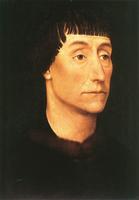
Portrait of a Man
Rogier van der Weyden
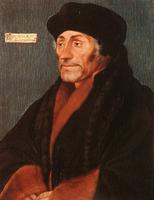
Erasmus of Rotterdam
Hans Holbein the Younger
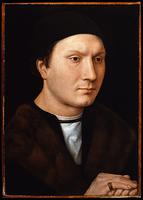
Portrait of an Unknown Man with a Letter
Hans Memling
Portrait of Sir Thomas More
Peter Paul Rubens