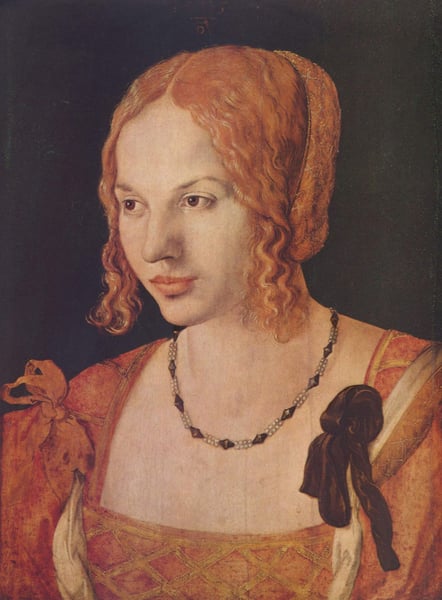
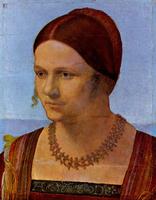
This artwork is significant as a quintessential example of Northern Renaissance portraiture, demonstrating how Albrecht Dürer synthesized the period’s defining traits—meticulous detail, symbolic precision, and psychological depth—into a single, compelling human likeness. The style’s emphasis on empirical observation is evident in the minute rendering of textures and features, while the genre of portraiture allows Dürer to capture not just a physical appearance but the sitter’s inner character and social standing, a hallmark of Northern Renaissance humanism. The work’s importance lies in its ability to convey individuality with a degree of naturalism and emotional resonance that was pioneering for its time, reflecting the Northern European commitment to truthfulness and the emerging value of the individual in art.