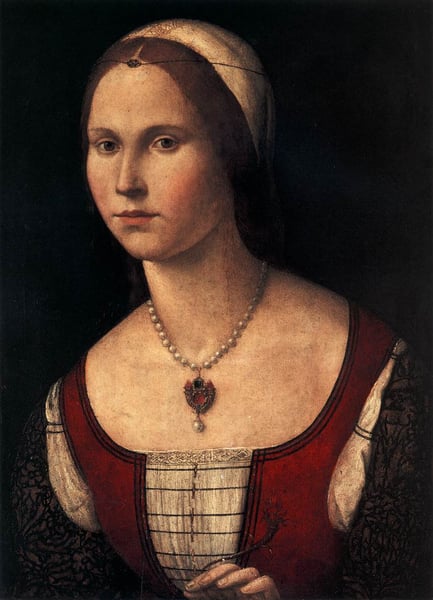
Portrait of a Young Woman
Dettagli
Analisi esperta di Portrait of a Young Woman di Vittore Carpaccio
Stile: High Renaissance · Genere: portrait
As an expert art historian, I will analyze the artwork based solely on the provided structured facts: Artwork: Portrait of a Young Woman by Vittore Carpaccio; Style: High Renaissance; Genre: portrait.
Significance within the High Renaissance:
Vittore Carpaccio (c. 1465–1525/26) is best known for his expansive narrative cycles (such as the Legend of St. Ursula), yet his portraits hold a distinct place within Venetian High Renaissance art. This work, Portrait of a Young Woman, exemplifies the period's move toward naturalism and psychological depth, while retaining a uniquely Venetian sensitivity to light, color, and texture.
What makes this artwork significant:
-
Transitional Mastery: Though often associated with the earlier Quattrocento narrative tradition, Carpaccio's portraiture here aligns with High Renaissance ideals. The painting likely captures a specific individual with a calm, introspective gaze—a hallmark of the era's focus on human dignity and inner life. The sitter is not simply a decorative figure but a presence, suggesting a new interest in individual character.
-
Venetian Color and Light: As a High Renaissance Venetian work, the portrait likely employs the city's characteristic colorito (emphasis on color and atmosphere) rather than Florentine disegno (drawing-based form). Carpaccio’s handling of light—soft, diffused, and descriptive of fabric and skin—contributes to a palpable sense of realism and elegance, making the young woman appear both idealized and convincingly human.
-
Detail as Narrative: While the fact set does not provide specific iconographic details, Carpaccio’s known meticulousness suggests that elements of costume, jewelry, or background (such as a window or landscape) would carry symbolic meaning—perhaps referencing virtue, wealth, or marital status. This aligns with High Renaissance portraiture's dual role: to both record likeness and convey social or moral status.
-
Rarity within Carpaccio’s Oeuvre: Carpaccio painted relatively few independent portraits; most figures appear within narratives. Therefore, Portrait of a Young Woman offers a concentrated view of his skill in capturing a single, poised individual—a quieter but equally masterful side of his output that connects him to contemporaries like Giovanni Bellini, who also elevated Venetian portraiture during the High Renaissance.
In summary, the significance of Portrait of a Young Woman lies in its embodiment of High Renaissance values—naturalism, psychological engagement, and harmonious composition—filtered through Carpaccio’s distinct Venetian sensibility. It demonstrates that even a narrative specialist could produce a portrait of striking presence and subtlety, contributing to the period's broader achievements in humanist representation.
Museum / Gallery
Visivamente simili
20 opere con composizione e palette affini
Portrait of a Woman (La Muta)
Raphael
Portrait of a Lady
Giovanni Antonio Boltraffio
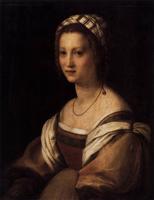
Lucrezia di Baccio del Fede, the Artist's Wife
Andrea del Sarto
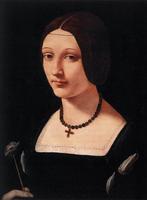
Portrait of a Lady as St. Lucy
Giovanni Antonio Boltraffio
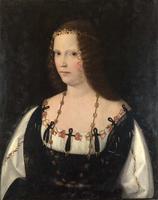
Portrait of a Lady
Bartolomeo Veneto
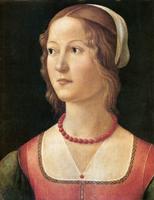
Portrait of a Young Woman
Domenico Ghirlandaio
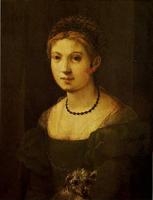
Portrait of a Young Woman
Jacopo Pontormo
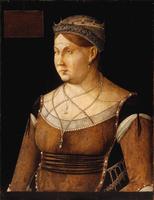
Portrait of Catherine Cornaro Queen of Cyprus
Gentile Bellini
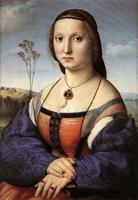
Portrait of Maddalena Doni
Raphael
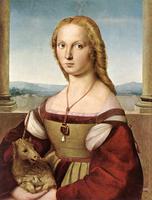
Portrait of a Lady with a Unicorn
Raphael
Portrait of a Venetian
Albrecht Durer
Portrait of Catherine de' Medici
Cristofano dell'Altissimo
Portrait of a young Venetian
Albrecht Durer
Queen Eleanor of Austria
Mabuse
Portrait of Katharina Furlegerin with her Hair Up (Braided)
Albrecht Durer
The Pregnant Woman, La Donna Gravida
Raphael
Marie Haneton
Bernard Van Orley
Portrait of a Woman
Hans Holbein the Elder
Portrait of a Young Woman
Giovanni Antonio Boltraffio
Portrait of a Noble Lady
Bartolomeo Veneto