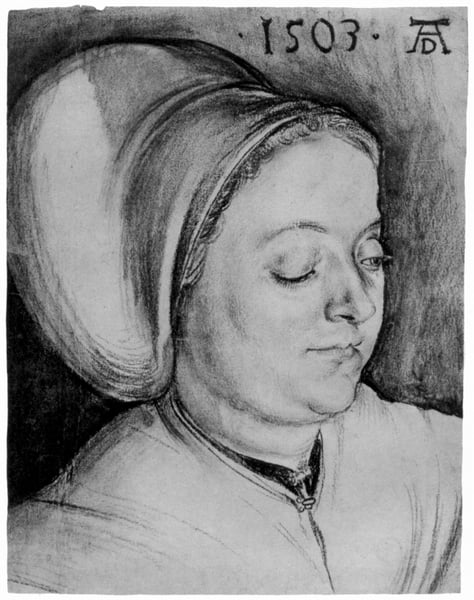
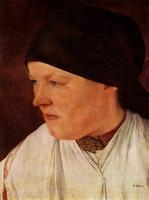
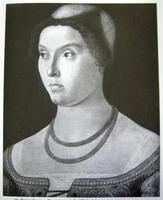
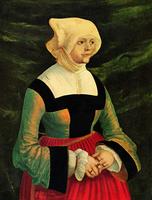
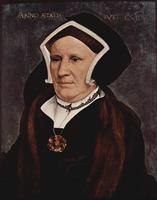
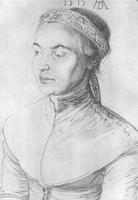
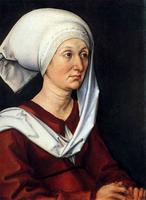
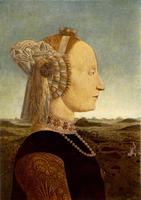
This portrait is a masterful example of Albrecht Dürer’s Northern Renaissance style, demonstrating the synthesis of meticulous naturalism with profound psychological depth. The subject, Creszentia Pirckheimer, was a nun and the sister of Dürer’s humanist friend Willibald Pirckheimer, placing the work within the intellectual circles of Nuremberg.
Dürer’s technique—the precise rendering of fabric, the subtle modulation of light across the face, and the careful attention to texture—reflects the Northern Renaissance’s devotion to empirical observation. Yet the painting transcends mere likeness. The sitter’s direct, calm gaze and quiet composure convey a sense of inner life and moral gravity, typical of Dürer’s portraits. Her modest dress and wimple anchor her identity in religious life, while the restrained palette and soft modeling emphasize human dignity over ornament.
Significantly, Dürer combines this Northern realism with the compositional balance and psychological space he absorbed from Italian art, making the portrait a bridge between traditions. The work is a testament to Dürer’s ability to capture not just a face but a character, and to elevate the portrait genre into a vehicle for enduring humanist expression.