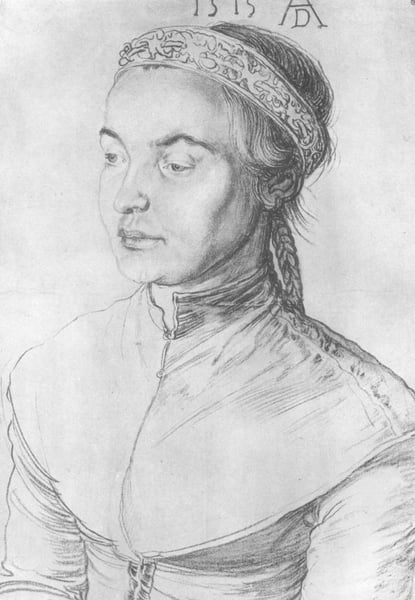
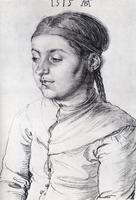
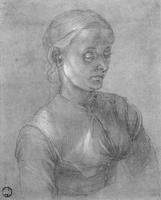
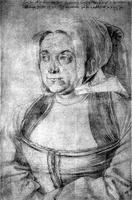
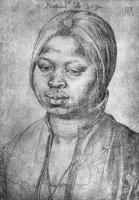
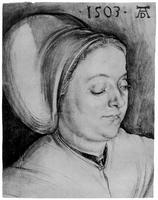
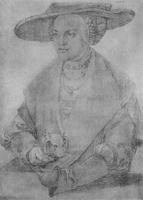
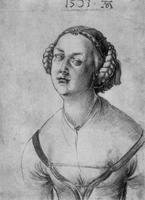
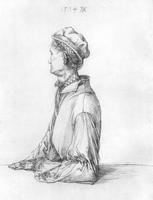
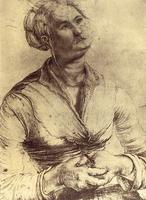
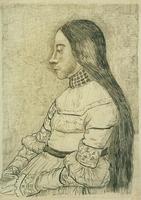
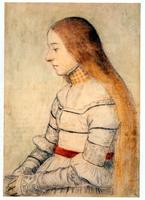
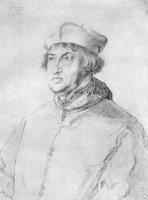
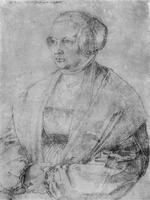
This portrait is significant within the Northern Renaissance style for its demonstration of Albrecht Dürer’s mastery of intimate realism. As a portrait, it exemplifies the era’s shift toward capturing individual personality and psychological depth rather than idealized forms. Dürer’s meticulous attention to texture, light, and the sitter’s unique features—hallmarks of Northern European art—elevates this work from a simple likeness to a profound study of human presence, reflecting the period’s growing emphasis on observation and naturalism.