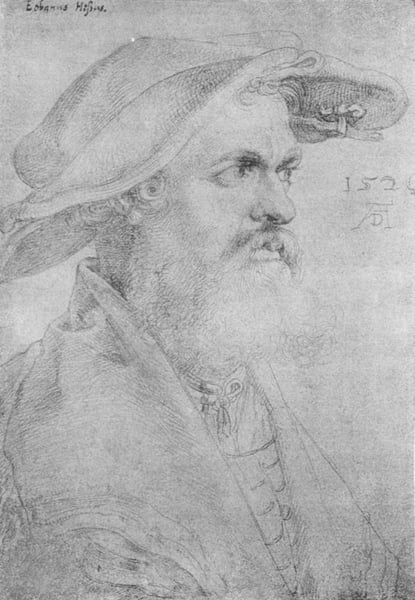
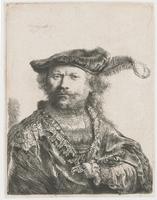
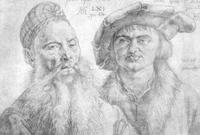
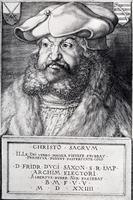
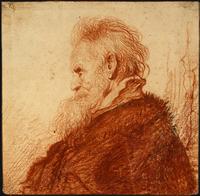
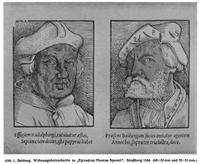
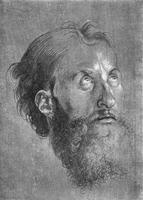
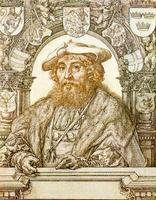
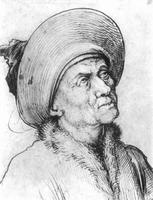
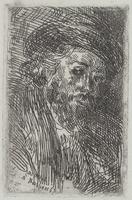
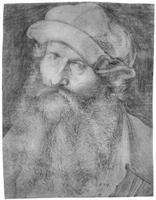
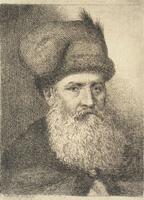
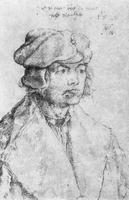
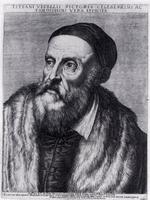
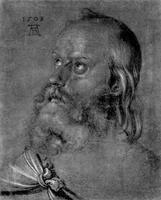
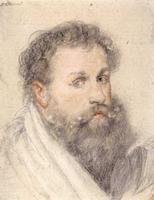
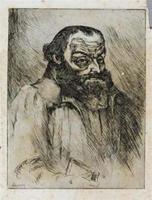
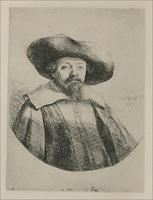
"Portrait of Hesse Eobanus" by Albrecht Dürer exemplifies the Northern Renaissance’s synthesis of meticulous naturalism and psychological depth. As a portrait within this period, it reflects Dürer’s mastery in rendering precise texture and lifelike detail—hallmarks of the Northern tradition—while also conveying the sitter’s individuality and inner life, a humanist concern shared with the Italian Renaissance. The work’s significance lies in how it blends observational accuracy with symbolic or intellectual resonance, characteristic of Dürer’s ability to elevate portraiture beyond mere likeness to a study of character and status. Within the Northern Renaissance, such portraits affirmed the growing value placed on individual identity and the artist’s role in capturing it with technical brilliance.