
Expert analysis of Albrecht Durer’s St. Magdalena
Style: Northern Renaissance · Genre: religious painting
Expert Analysis: "St. Magdalena" by Albrecht Dürer
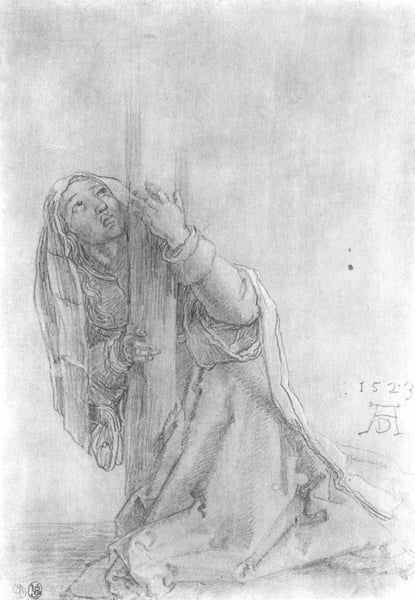
As a religious painting of the Northern Renaissance, Albrecht Dürer’s St. Magdalena exemplifies the period’s synthesis of meticulous naturalism with profound spiritual symbolism. The work’s significance lies in how it embodies key Northern Renaissance concerns: the fusion of observed reality with devotional intensity, and the elevation of individual saints as relatable yet transcendent figures.
Style and Technique: Dürer, a master of line and detail typical of the Northern Renaissance, renders St. Magdalena with extraordinary precision. The saint’s flowing hair, rich fabrics, and the subtle modeling of her face demonstrate the Northern emphasis on texture and optical truth—a direct contrast to the more idealized forms of the Italian High Renaissance. The use of light and shadow (chiaroscuro) here is not merely atmospheric but symbolic, highlighting the saint’s inner grace and contemplative state.
Genre and Subject: As a religious painting, St. Magdalena reflects the Northern Renaissance’s shift toward intimate, personal devotion. Mary Magdalene, a penitent sinner turned apostle, was a popular subject for audiences seeking models of redemption. Dürer likely portrays her with her traditional attributes—an ointment jar and flowing hair—but the composition’s focus on her quiet, inward-looking expression elevates the work from a mere hagiographic image to a meditation on repentance and spiritual awakening.
Significance within the Period: This work is significant for several reasons:
- Humanizing the Sacred: Dürer depicts St. Magdalene not as a distant icon but as a psychologically credible individual, reflecting the Northern Renaissance’s interest in human emotion and inner life.
- Print and Painting Interplay: Though a painting, the crisp, almost engraved lines hint at Dürer’s mastery as a printmaker, demonstrating how Northern artists blurred media boundaries.
- Symbolism of Devotion: The saint’s direct gaze and the tactile rendering of her hair and jar engage the viewer in an intimate dialogue—a hallmark of Northern devotional art that sought to make faith tangible.
In sum, St. Magdalena stands as a testament to Dürer’s ability to merge naturalistic observation with deep religious feeling, capturing the essence of the Northern Renaissance: a world where every fold of fabric and strand of hair becomes a vehicle for divine contemplation.
Visually similar
20 works with related composition and palette
The Holy Family With St. John, The Magdalen And Nicodemus
Albrecht Durer
Maria
Albrecht Durer
Study sheet with Madonna and child, hand and sleeve
Albrecht Durer
Study of a scene on a beach
Alfred Dehodencq
Virgin of the Annunciation
Matthias Grünewald
Study of an Apostle
Matthias Grünewald
Virgin and Child (Madonna of Humility)
Andrea Mantegna
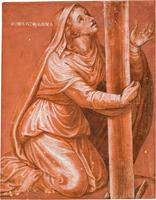
La Magdalena Al Pie De La Cruz
Vicente Juan Masip
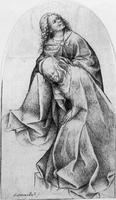
Mary and John (Mary and John at the Foot of the Cross)
Hieronymus Bosch
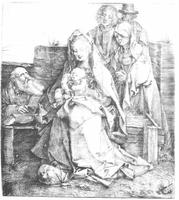
The holy family
Albrecht Durer
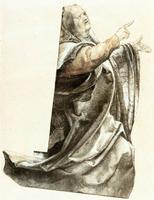
Complaining Pharisee
Matthias Grünewald
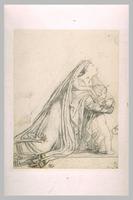
Andromache and Astyanax
Pierre-Narcisse Guerin

An Apostle from the Transfiguration
Matthias Grünewald

Visitation
Jacopo Pontormo
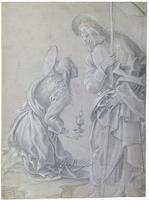
Kneeling Saint Mary Magdalene and Standing Christ
Filippino Lippi
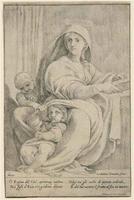
Madonna and Child with Saint John
Ludovico Carracci
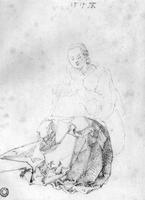
Madonna and Child
Albrecht Durer

Two holy women in prayer
Andrea Mantegna
Visitation
Albrecht Durer
The Holy Family with angels under trees
Albrecht Durer