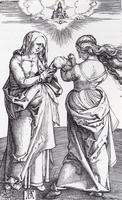
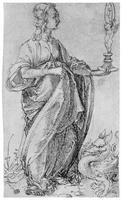
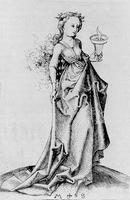
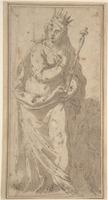
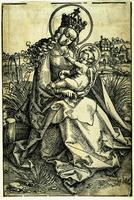
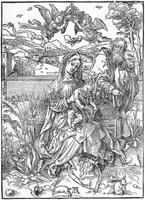
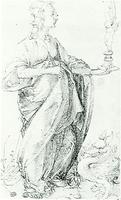
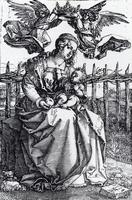
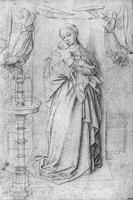
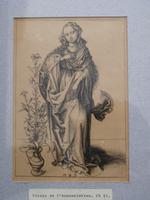
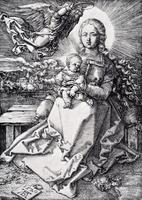
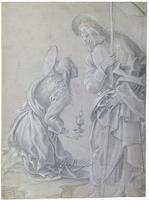
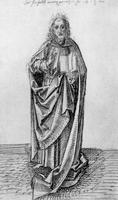
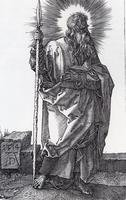
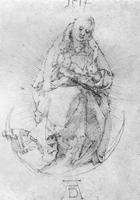
This religious painting by Albrecht Dürer exemplifies the Northern Renaissance’s fusion of meticulous naturalism with symbolic depth. Dürer’s rendering of St. Margaret would typically emphasize crisp detail, rich texture, and a luminous palette—hallmarks of the era’s oil technique—while the saint’s posture and attributes (often a cross or dragon) convey her spiritual triumph. The work’s significance lies in its balance: Dürer brings the sacred figure into a tangible, earthly presence without losing transcendent meaning, reflecting the Northern Renaissance’s drive to make the divine accessible through precise observation. As a religious painting, it also showcases how Dürer elevated devotional subjects into works of both intimate piety and artistic mastery, reinforcing the period’s shift toward individual contemplation and the artist as a distinct creative voice.