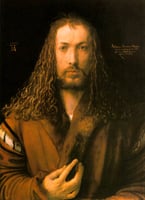
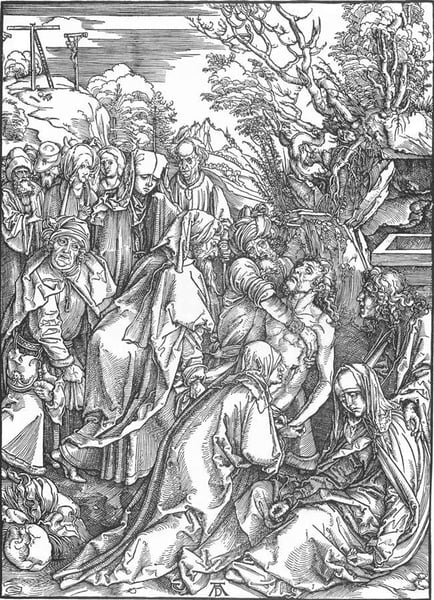
Analisi esperta di The Entombment di Albrecht Durer
Stile: Northern Renaissance · Genere: religious painting
As an expert art historian, my analysis of "The Entombment" by Albrecht Dürer is grounded in the structured facts provided: it is a Northern Renaissance religious painting. Below is an expert description that focuses on the work’s significance within its style and period.
Expert Analysis of "The Entombment" by Albrecht Dürer
Albrecht Dürer’s The Entombment stands as a quintessential example of the Northern Renaissance style applied to a sacred subject. The work’s significance lies in how Dürer synthesizes the era’s defining traits—meticulous naturalism, emotional gravity, and symbolic density—to transform a familiar biblical scene into a profound meditation on grief and salvation.
1. Northern Renaissance Precision and Naturalism Dürer’s mastery of detail is on full display. Every fold of fabric, the texture of Christ’s pale flesh, and the weathered faces of the mourners are rendered with almost scientific accuracy. This hyper-realistic approach, a hallmark of Northern Renaissance art, contrasts with the idealized forms of Italian contemporaries. Here, the physical specificity makes the tragedy tangible—the viewer is not observing a distant holy event but a real, painful human moment.
2. Emotional Intensity and Devotional Impact Unlike earlier, more formal depictions of the Entombment, Dürer heightens the psychological drama. The figures crowd tightly around Christ’s body, their postures conveying collective sorrow: Joseph of Arimathea strains under the weight, the Virgin Mary collapses in anguish, and John the Evangelist supports her with averted eyes. This emotional rawness was intentional for a religious painting—it was meant to inspire empathy and devotion, inviting the viewer into a direct, personal encounter with Christ’s suffering.
3. Iconographic and Thematic Depth Dürer embeds the scene with Northern Renaissance symbolism. The dark, rocky tomb foreshadows the grave, while the stark diagonal of Christ’s body echoes the downward pull of death. Yet, the subtle light on his limbs hints at the resurrection to come. The inclusion of Nicodemus (often with his own devotional attributes) and the women at the sepulcher roots the composition in Gospel narrative, reinforcing the work’s role as both a historical depiction and a theological lesson.
4. Synthesis of Northern and Italian Influences While firmly Northern in its detail and emotion, The Entombment also reflects Dürer’s exposure to Italian Renaissance art—particularly in its balanced composition and the muscular anatomy of Christ. This cross-pollination marks a significant moment in art history: Dürer proves that Northern sensitivity to surface and symbol could harmonize with Southern ideals of structure and monumentality, elevating the religious painting to new intellectual and emotional heights.
Conclusion The Entombment is significant because it embodies the Northern Renaissance’s core achievement: making the sacred feel achingly human. Dürer does not merely illustrate a biblical event; he immerses the viewer in an experience of palpable loss, rendered with unwavering technical skill. In doing so, he reaffirms the power of religious art to move, teach, and console—an enduring legacy of the Northern Renaissance.
Museum / Gallery
Visivamente simili
20 opere con composizione e palette affini
The Lamentation for Christ
Albrecht Durer
The Lamentation for Christ
Albrecht Durer
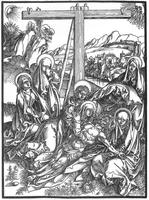
Lamentation for the Dead Christ
Albrecht Durer
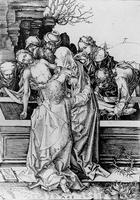
Entombment Copperplate
Martin Schongauer
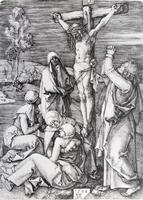
Crucifixion
Albrecht Durer
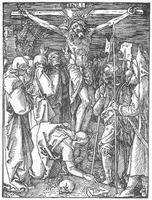
Christ on the Cross
Albrecht Durer
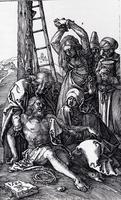
Lamentation Over Christ
Albrecht Durer
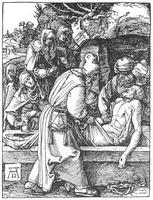
The Entombment
Albrecht Durer
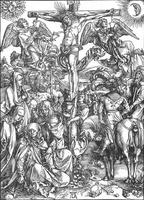
The Crucifixion
Albrecht Durer
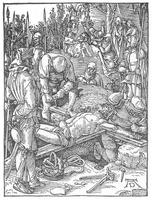
Christ Being Nailed to the Cross
Albrecht Durer
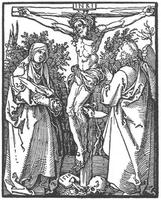
Christ on the Cross with the Virgin and St John
Albrecht Durer
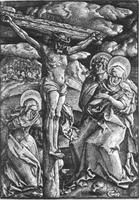
Crucifixion
Hans Baldung
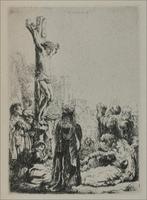
The Crucifixion a Square Small Plate
Rembrandt
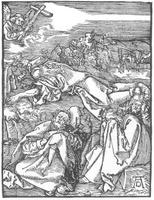
Jesus Christ on the Mount of Olives
Albrecht Durer
Crucifixion
Albrecht Durer
The Entombment
Hieronymus Bosch
The Descent from the Cross
Albrecht Durer
The tribute money
Rembrandt
The Erection of the Cross
Hans Baldung
Crucifixion
Albrecht Durer