
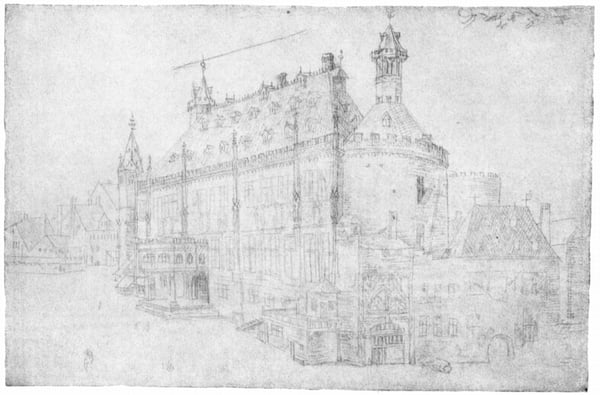
Analisi esperta di The town hall in Aachen di Albrecht Durer
Stile: Northern Renaissance · Genere: design
As an expert art historian, here is my analysis of "The town hall in Aachen" by Albrecht Dürer, based solely on the provided facts.
Artwork: The town hall in Aachen
Artist: Albrecht Dürer
Style: Northern Renaissance
Genre: Design
Analysis
Albrecht Dürer’s The town hall in Aachen stands as a singular document of the Northern Renaissance’s intersection with Gothic civic architecture, rendered with the precision and intellectual rigor that define Dürer’s unique position in art history. The work belongs to the genre of design — likely a preparatory drawing or architectural study — which itself was a transformative category in the Renaissance, elevating the systematic planning of form to a fine art.
Significance within the Northern Renaissance style: Dürer, as the foremost German artist of the period, married the meticulous detail of Northern European painting (inherited from the van Eyckian tradition) with the humanist principles of the Italian Renaissance, particularly in perspective and proportion. In this design, we see evidence of this fusion: the structure is not merely a decorative chronicle of a building but a disciplined exercise in spatial organization. The town hall, a symbolic center of civic authority, is rendered with a crystalline clarity that reflects the Northern Renaissance’s obsession with empirical observation — every window, roofline, and facade is recorded with a draftsman’s care, yet the composition also hints at an idealized, balanced harmony.
Why the genre of “design” matters: During the Northern Renaissance, the practice of design (disegno in Italian terms) was increasingly valued as the intellectual foundation of art. Dürer himself wrote treatises on measurement and proportion. This work, as a design, is not a finished painting but a blueprint — a record of how the artist saw and reinterpreted a real building. Its significance lies in how it demonstrates Dürer’s role as a systematic observer: he captures the town hall’s Gothic spires and stepped gables with a linear precision that borders on the architectural, yet the slight variations in line weight and the atmospheric handling of the sky (if any is present) betray the hand of a master printmaker and painter. It is a study that bridges the medieval chronicle tradition and the Renaissance’s newfound faith in measurable reality.
In the context of Dürer’s oeuvre: Dürer traveled extensively in the Low Countries and Germany, and his Aachen study likely dates from his Netherlandish journey. Such works are invaluable for their topographical accuracy and their role in establishing a Northern vocabulary for representing civic pride. The town hall itself — a symbol of burgher power — becomes a vehicle for Dürer to explore the tension between the organic, ornate forms of the late Gothic and the nascent Renaissance ideals of order. This design is therefore significant not only as a piece of architectural history but as a document of how one of the greatest Northern Renaissance minds translated a specific place into a timeless statement of artistic control.
Final assessment: The town hall in Aachen is a brilliant exemplar of the Northern Renaissance’s commitment to empirical realism refracted through design. It shows Dürer at his most analytically exacting, turning a local civic monument into a universal study of structure, light, and authority. The work’s power lies in its refusal to merely depict — it designs the building anew, making the viewer see the Gothic form with Renaissance eyes.
Museum / Gallery
Visivamente simili
20 opere con composizione e palette affini
Haarlem city
Pieter Saenredam
The Market Place and Town Hall, Haarlem
Gerrit Berckheyde
View
Joseph Hunin
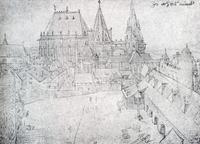
The Cathedral Of Aix La Chapelle With Its Surroundings, Seen From The Coronation Hall
Albrecht Durer
Two Castles
Albrecht Durer
The Archduke Albert and Archduchess Isabel Clara Eugenia in the Palace of Tervuren Brussels
Jan Brueghel the Elder
View of the Grote Markt in Haarlem
Pieter Saenredam
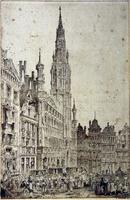
Hotel de Ville Brussels
John Ruskin
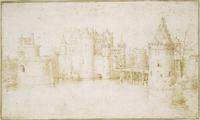
Walls Towers and Gates of Amsterdam
Pieter Bruegel the Elder
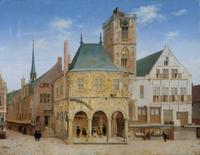
The Old Town Hall at Amsterdam
Pieter Saenredam
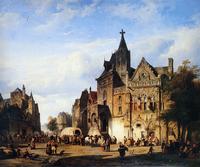
Cityview
Cornelis Springer
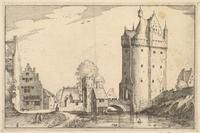
Town Gate, Plate 2 from Regiunculae Et Villae Aliquot Ducatus Brabantiae
Master of the Small Landscapes
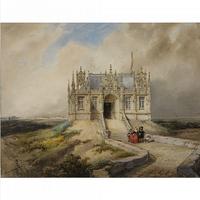
In front of a Gothic building
Hubertus van Hove
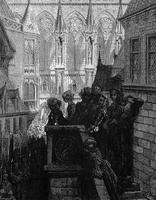
Prayers for the Dead
Gustave Dore
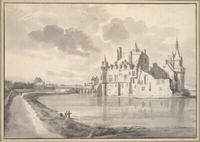
Schloss Duurstede
Roelant Roghman
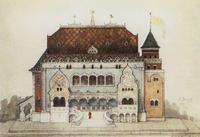
The project of the Russian pavilion at the Paris Exhibition
Viktor Vasnetsov
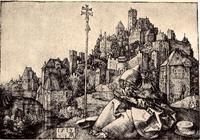
St Anthony at the City
Albrecht Durer
Gorgon
Gustav Adolf Mossa
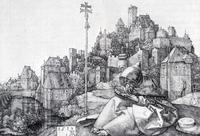
St. Anthony
Albrecht Durer
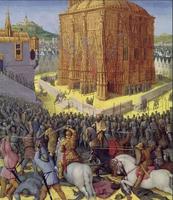
The Siege of Jerusalem by Nebuchadnezzar
Jean Fouquet