
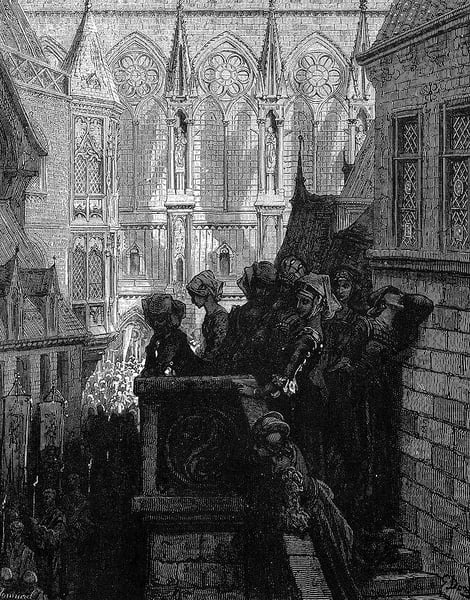
Expert analysis of Gustave Dore’s Prayers for the Dead
Style: Romanticism · Genre: illustration
Expert Analysis of "Prayers for the Dead" by Gustave Doré
Style & Period Context (Romanticism)
Gustave Doré’s Prayers for the Dead exemplifies the Romantic fascination with mortality, spirituality, and the sublime. The Romantic movement rejected Neoclassical restraint in favor of intense emotion, dramatic contrasts, and a deep engagement with the supernatural or the divine. Doré, working primarily as an illustrator, channeled these ideals into highly detailed, atmospheric compositions that blur the line between fine art and narrative storytelling.
Significance within the Genre of Illustration
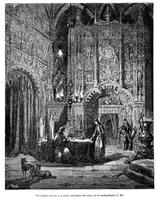
Doré elevated illustration from a mere accompaniment to text into a standalone artistic achievement. In Prayers for the Dead, his mastery of chiaroscuro and intricate linework creates a palpable mood of grief and reverence. The composition likely emphasizes the verticality of Gothic architecture—a common Romantic trope—drawing the viewer’s eye upward toward the ethereal, while the mourners’ somber postures anchor the scene in human sorrow. This interplay of light and shadow, of earthly weight and spiritual aspiration, is quintessential Doré.
Why the Work Matters
- Technical Virtuosity: Doré’s densely cross-hatched engravings and dramatic lighting effects achieve a painterly depth within the confines of black-and-white illustration, influencing later visual media from comics to film.
- Emotional Resonance: The scene captures the Romantic obsession with death as both an end and a threshold, making the viewer confront their own mortality through shared ritual and prayer.
- Narrative Power: As an illustration, it likely accompanied a literary work (e.g., a Bible, Dante, or a Gothic novel) but transcends its source, becoming a universal meditation on loss.
In summary, Prayers for the Dead stands as a masterwork of Romantic illustration, where Doré’s technical skill, emotional depth, and atmospheric drama converge to define the period’s visual imagination of the sacred and the mournful.
Visually similar
20 works with related composition and palette
Faust and Marguerite
Sir Lawrence Alma-Tadema
The Presentation of the Virgin
Limbourg brothers
Building of the Temple of Jerusalem
Jean Fouquet
Der Karneval
Georg von Rosen
The Cathedral Of Aix La Chapelle With Its Surroundings, Seen From The Coronation Hall
Albrecht Durer
Seville Catedral on the Side of the Steps
Jenaro Pérez Villaamil
Pulpit of Saint-Lô, Normandy
Samuel Prout
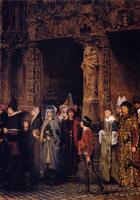
Leaving Church in the Fifteenth Century
Sir Lawrence Alma-Tadema
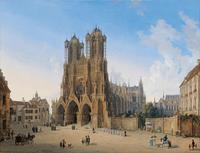
The Cathedral of Notre Dame in Rheims with a Procession of Communicants
Domenico Quaglio the Younger
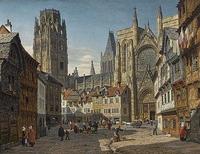
City
Heinrich Hansen
Lincoln Cathedral, the Cloisters
Edward R. Taylor
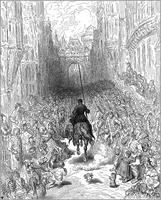
Orlando Furioso
Gustave Dore
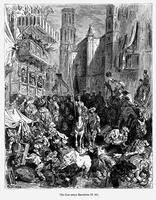
Don Quixote
Gustave Dore
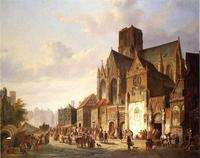
View of Montelspran
Cornelis Springer
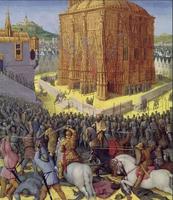
The Siege of Jerusalem by Nebuchadnezzar
Jean Fouquet
Don Quixote
Gustave Dore
Orlando Furioso
Gustave Dore
La Galerie De Notre-dame in Paris
Charles Meryon
The City of Cologne, engraved by M.J. Starling after Leitch
William Leighton Leitch
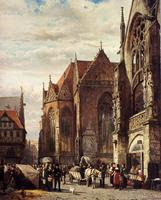
Many Figures On The Market Square In Front Of The Martinikirche, Braunschweig
Cornelis Springer