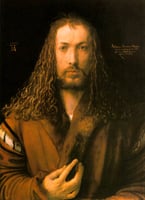
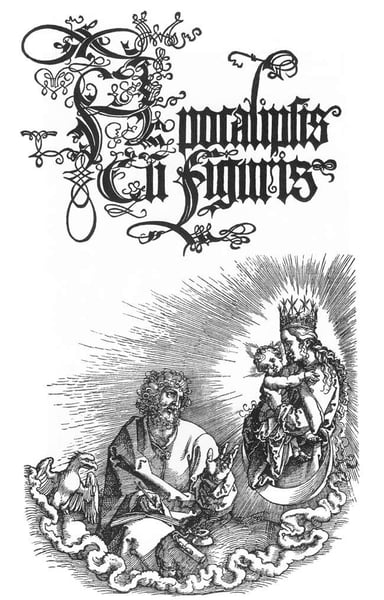
Title page to the second Latin Edition of 1511
Dettagli
Analisi esperta di Title page to the second Latin Edition of 1511 di Albrecht Durer
Stile: Northern Renaissance · Genere: illustration
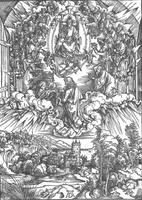
This title page is a remarkable example of Albrecht Dürer’s mastery of the woodcut medium and his pivotal role in transforming the printed book into a work of art during the Northern Renaissance. As an illustration—specifically a title page for a second Latin edition—it serves not merely as decoration but as a sophisticated visual argument that establishes the book’s authority, theological content, and the printer’s prestige.
Significance within the Northern Renaissance:
-
Integration of text and image: Dürer elevates the title page from a simple label to a unified compositional whole. He typically frames the text with elaborate architectural or foliage motifs, echoing the Gothic and classical fusion characteristic of the period. This integration reflects the Northern Renaissance emphasis on clarity, structure, and didactic purpose—the image must immediately convey the book’s subject and importance.
-
Printmaking innovation: The crisp, precise lines and intricate hatching demonstrate Dürer’s technical brilliance as a printmaker. Woodcut title pages were often coarser; Dürer’s control of line and shadow brings a sculptural, three-dimensional quality that rivals engraving. This elevates the medium, showing that a woodcut could possess the detail and expressiveness of painting.
-
Humanist and religious synthesis: Dürer’s title pages frequently incorporate allegorical figures, classical columns, or biblical scenes that anchor the text in both Christian tradition and the revived learning of the Renaissance. For a Latin edition (likely a religious or scholarly work), such imagery asserts the book’s place in both sacred and intellectual history.
-
Commercial and artistic branding: In 1511, Dürer was at the height of his fame. A second edition implies demand; the title page acts as a visual marker of quality, distinguishing Dürer’s work from that of lesser craftsmen. His monogram (typically present) functions as a signature of authenticity, making the title page a collectible print in its own right.
Why it matters: This title page exemplifies how Dürer used the printed page to communicate complex ideas with elegance and precision. It stands as a bridge between the medieval illuminated manuscript tradition and the modern illustrated book, showcasing the Northern Renaissance’s drive to marry beauty, intellect, and faith in a durable, reproducible format.
Museum / Gallery
Visivamente simili
20 opere con composizione e palette affini
Madonna as nursing mother and divine being
Albrecht Durer
The Last Judgment
Albrecht Durer
The Virgin and Child with St. John, by Guercino
Giovanni Battista Piranesi
The Coronation of the Virgin
Albrecht Durer
Agony In The Garden
Albrecht Durer
Madonna Crowned By Two Angels
Albrecht Durer
Holy Family with three Hares
Albrecht Durer
The Madonna with Child and St. John the Baptist
Giovanni Battista Piranesi
Madonna and Child
Hans Baldung
Crescent Madonna
Albrecht Durer
Holy Family: the Virgin seated on the ground feeding the Holy Child standing
Giovanni Battista Piranesi
Illustration for the Poem "The Three Statues of Aegina"
Frederick Sandys
Madonna and Child in the Clouds
Rembrandt
Christ on the Mount of Olives
Albrecht Durer
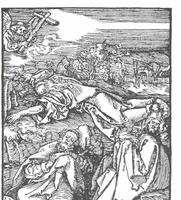
Christ on the mount olive
Albrecht Durer
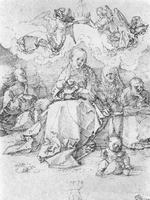
Holy Family, crowned by two angels
Albrecht Durer
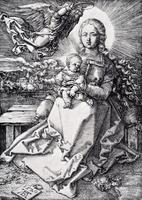
Madonna Crowned By An Angel
Albrecht Durer
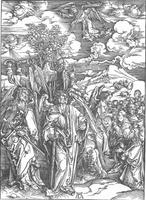
Four Angels Staying the Winds and Signing the Chosen
Albrecht Durer
St John and the Twenty four Elders in Heaven
Albrecht Durer
Louis De La Vergne-Montenard De Tressan
Jean-Baptiste van Loo