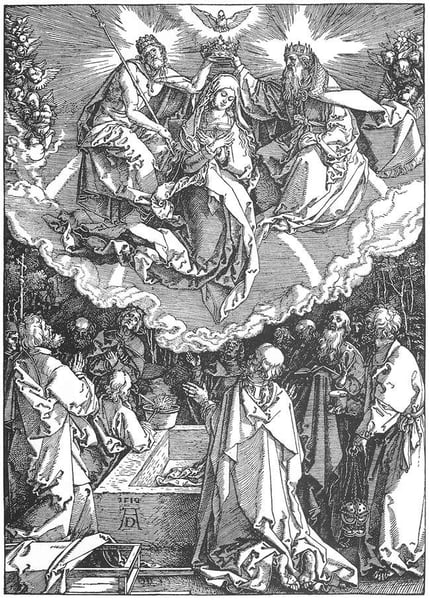
Analysis of "The Coronation of the Virgin" by Albrecht Dürer
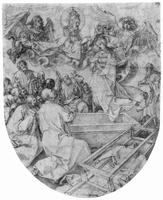
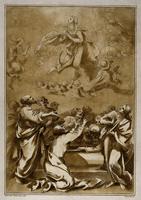
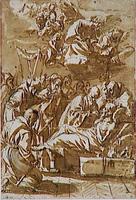
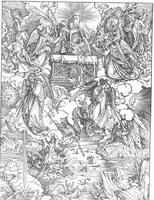
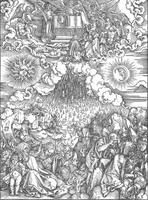
As a defining work of the Northern Renaissance, this religious painting exemplifies the period’s distinctive blend of meticulous naturalism and profound spiritual symbolism. While the composition presents a traditional Christian subject—the Virgin Mary being crowned Queen of Heaven—Dürer’s treatment reflects the Northern Renaissance’s emphasis on observable detail and emotional immediacy. The artist’s precise rendering of textures, fabrics, and heavenly light grounds the divine scene in a palpable, human reality, a hallmark of the Northern approach. This work is significant for its fusion of late Gothic elegance with early Renaissance spatial awareness, showcasing Dürer’s ability to convey theological narrative through intimate, tangible observation. Within the genre of religious painting, it stands as a testament to the Northern Renaissance’s redefinition of sacred art: not as distant iconography, but as a vivid, contemplative encounter between the viewer and the divine.