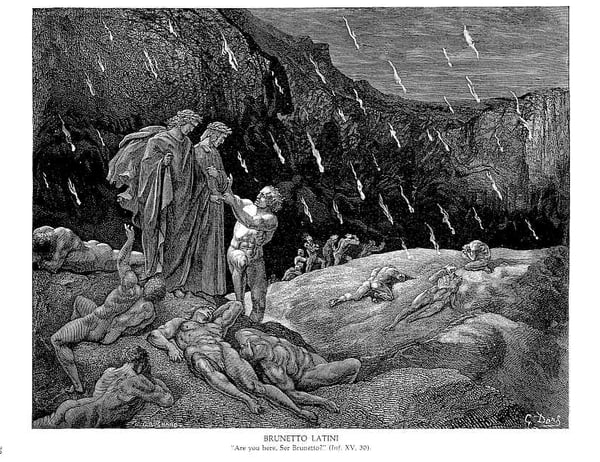
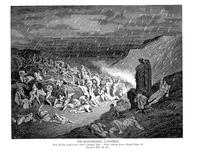
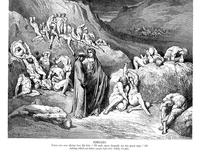
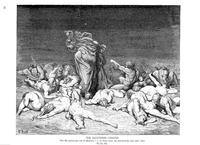
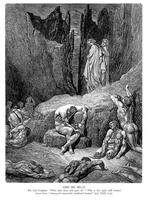
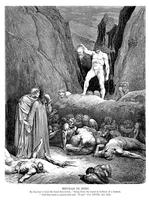
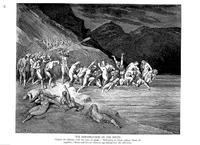
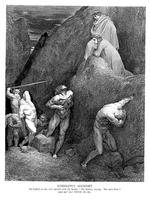
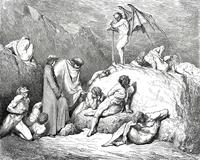
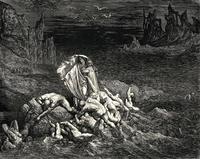
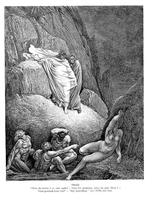
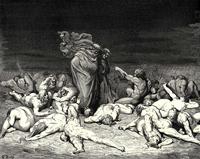
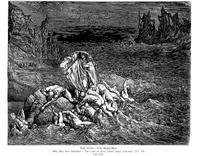
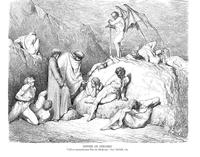
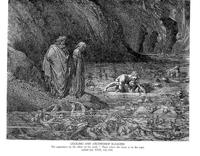
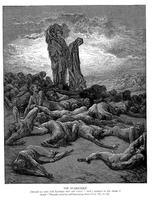
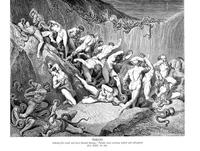
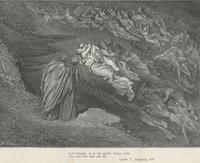
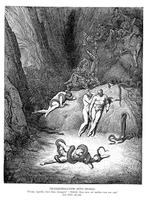
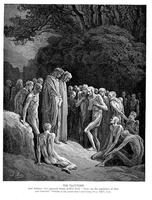
Gustave Doré’s Brunetto Latini stands as a quintessential example of Romantic illustration, merging the period’s emotional intensity with a masterful command of visual narrative. Executed in a dramatic chiaroscuro style, the work captures the doomed encounter between Dante and his mentor in the Inferno—a moment of intellectual gravitas and pathos. Doré’s significance lies in his ability to transform literary scenes into visceral, atmospheric experiences: here, the engulfing darkness of Hell and the starkly illuminated, anguished faces embody Romanticism’s fascination with human suffering, the sublime, and the intangible weight of history. As an illustrator, Doré elevated the genre by infusing it with the painterly ambition of high art, making the infernal landscape both terrifyingly immediate and poignantly human.