
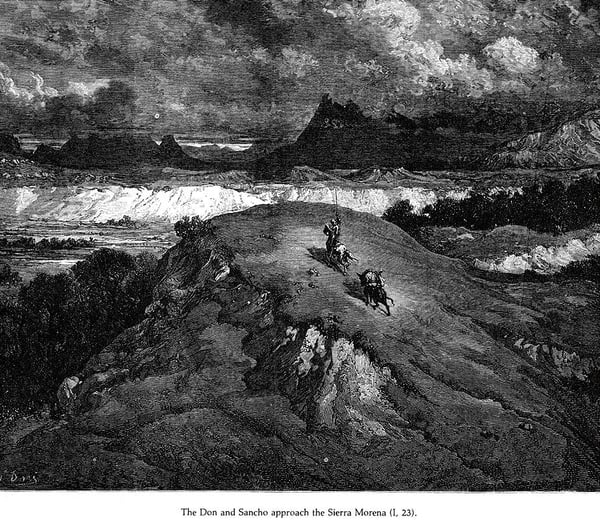
Expert analysis of Gustave Dore’s Don Quixote
Style: Romanticism · Genre: illustration
Expert Art Historical Analysis: "Don Quixote" by Gustave Doré (Romanticism, Illustration)
This work stands as a quintessential example of how Romantic illustration transformed literary interpretation through visual drama. Doré’s depiction of Cervantes’ delusional knight-errant is not merely a narrative accompaniment but an independent masterpiece that amplifies the novel’s psychological and emotional currents.
Significance Within Romanticism
Romanticism prized intense emotion, individuality, and the sublime over classical order. Doré channels these ideals through:
- Dramatic chiaroscuro: Stark contrasts of light and shadow evoke the internal turmoil of Don Quixote, casting the figure as both heroic and pitiable.
- Expansive, often desolate landscapes: The windmills, plains, or ruined castles become psychological landscapes, reflecting the protagonist’s fevered imagination and the loneliness of his quest.
- Dynamic, swirling lines: Doré’s engraved hatching creates a sense of movement and energy, mirroring Quixote’s restless idealism.
Genre: Illustration as High Art
Doré elevated book illustration from mere decoration to a respected artistic genre. His Don Quixote engravings (1863) are celebrated for their:
- Narrative density: Each image encapsulates multiple layers of the story—Quixote’s madness, Sancho Panza’s earthy pragmatism, and the tragicomic clash between reality and illusion.
- Technical virtuosity: The meticulous cross-hatching and tonal range in black-and-white engraving rival the emotional depth of painting, capturing textures from armor to windmill sails with startling realism.
- Psychological insight: Rather than simply picturing events, Doré visualizes Quixote’s inner world, making his foolishness and nobility equally palpable.
Lasting Impact
Doré’s illustrations became the definitive visual interpretation of Don Quixote for generations, shaping how readers imagined Cervantes’ characters. They also influenced later Romantic and Symbolist artists, proving that illustration could achieve the same emotional and aesthetic ambitions as the “fine arts.”
Verdict: Doré’s Don Quixote is significant as a Romantic masterpiece that uses the technical possibilities of illustration to explore the sublime tension between delusion and transcendence—a hallmark of the Romantic spirit.
Visually similar
20 works with related composition and palette
Slate Quarries
John Crome
Puy de Dôme
Jean-Francois Millet
La Cervara, the Roman Countryside
Camille Corot
Near Bolton Abbey, Yorkshire
Thomas Girtin
Landscape with Sandpit
Thomas Gainsborough
Landscape
Thomas Girtin
Okehampton
J.M.W. Turner
Pond in Branchhill
John Constable
The Saleve Cliffs near Geneva
Theodore Rousseau
Mousehold Heath
John Crome
Lake Zurich
Jan Hackaert
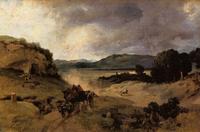
The Roman Campagna (La Cervara)
Camille Corot
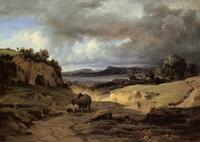
The Roman Campagna (La Cervara)
Camille Corot
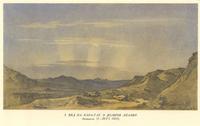
View of Karatau from Apazir valley
Taras Shevchenko
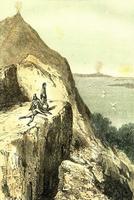
Journey to the Center of the Earth
Edouard Riou
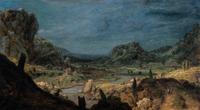
River valley
Hercules Seghers
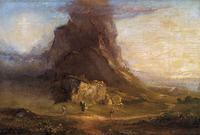
Study for Two Youths Enter Upon a Pilgrimage
Thomas Cole
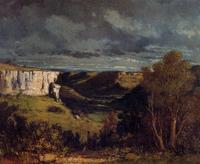
The Valley of the Loue in Stormy Weather
Gustave Courbet
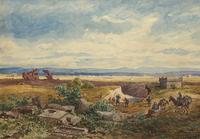
Ancient Wreck in the Village of Nikyup
Felix Philipp Kanitz
Phaëton in a Thunderstorm
Julius Caesar Ibbetson