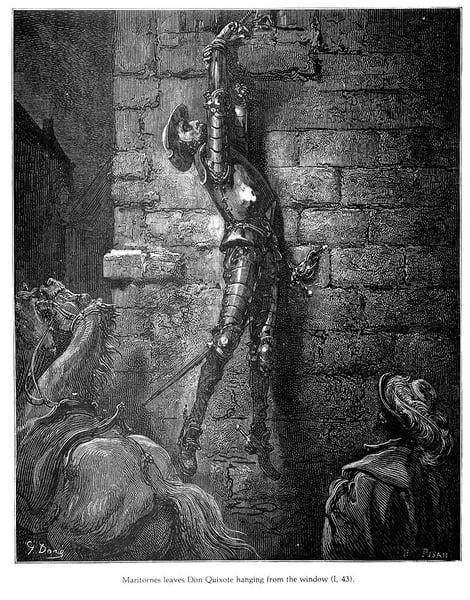
Based on the structured facts provided, Gustave Doré’s Don Quixote stands as a quintessential example of Romanticism in the illustration genre. Its significance lies in how Doré translates the Romantic fascination with individual imagination, heroic folly, and epic scale into a visual narrative. The artwork captures the essence of Cervantes’s knight-errant not merely as a comic figure, but as a tragic, visionary soul—a core Romantic trope. Doré’s masterful use of dramatic chiaroscuro, sweeping lines, and densely detailed landscapes amplifies the emotional intensity and grandeur, transforming an illustrated scene into a mythic, almost cinematic vision. Within Romanticism, this work exemplifies the movement’s preference for the sublime, the fantastical, and the psychologically charged, while in the illustration genre, it demonstrates how Doré elevated book art to a high dramatic art form, influencing generations of visual storytelling.