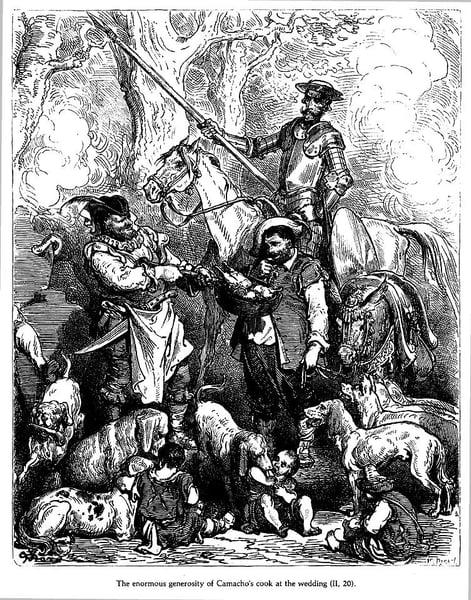
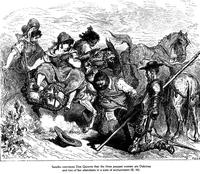
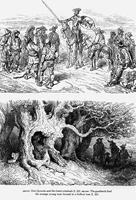
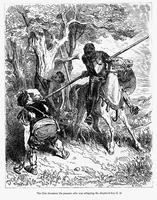
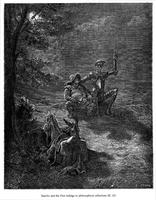
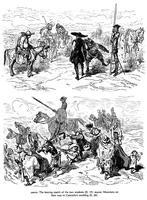
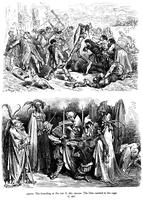
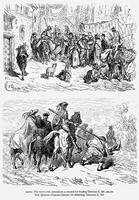
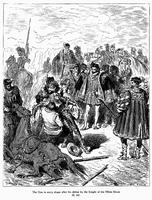
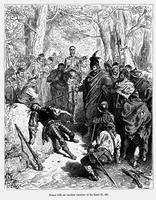
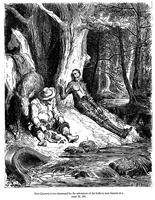
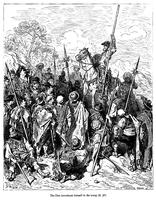
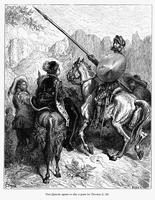
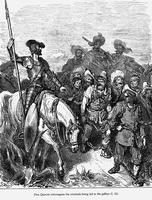
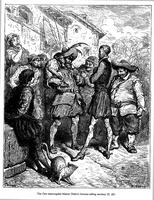
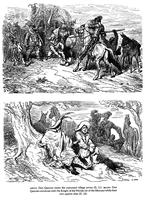
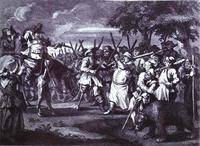
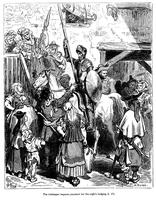
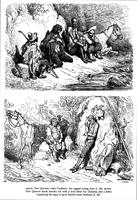
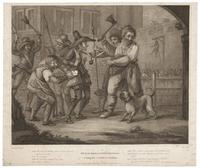
Gustave Doré’s Don Quixote is a masterful example of Romantic illustration, distinguished by its ability to merge literary narrative with the movement’s core ideals of emotion, drama, and the sublime. Doré’s treatment of Cervantes’s iconic character embodies Romanticism’s fascination with individualism and the tragic hero: the gaunt, visionary knight is rendered not as a mere comic figure, but as a profoundly sympathetic, isolated dreamer caught between imagination and reality. The dense, theatrical cross-hatching and stark chiaroscuro typical of Doré’s technique amplify the scene’s psychological intensity, transforming a simple literary illustration into a timeless meditation on ambition and madness. Within the Romantic period, Doré’s work stands out for its fusion of meticulous narrative clarity with an almost operatic grandeur, elevating the genre of book illustration to an art form capable of conveying epic pathos.