
Analisi esperta di Don Quixote di Gustave Dore
Stile: Romanticism · Genere: illustration
Expert Analysis: "Don Quixote" by Gustave Doré
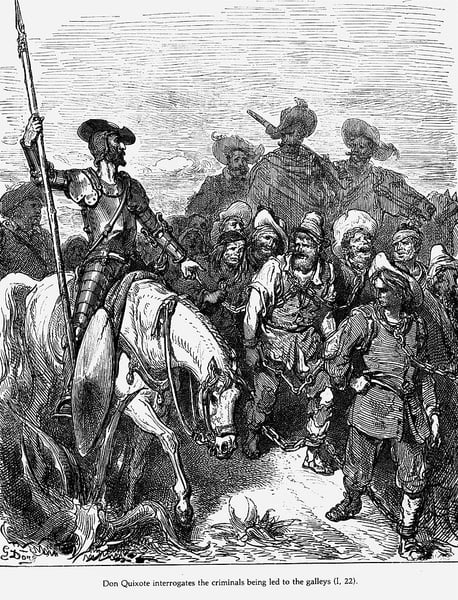
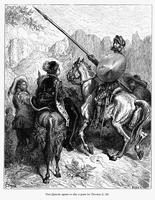
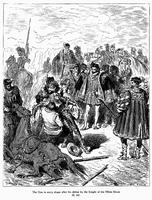
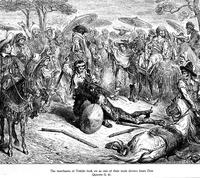
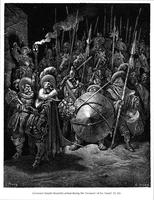
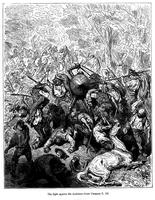
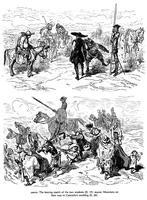
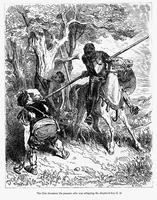
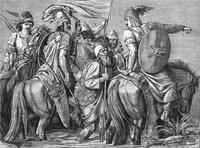
Gustave Doré’s illustration for Don Quixote is a quintessential example of Romanticism applied to literary imagery. Executed as an engraving, the work exemplifies the Romantic fascination with individual heroism, the sublime, and the tension between reality and imagination.
Significance within Romanticism:
Doré captures the epic, tragicomic essence of Cervantes’ knight-errant. The composition typically features Don Quixote as a gaunt, determined figure—often mounted on Rocinante—set against vast, dramatic landscapes or ruined structures. This use of scale and contrast aligns with Romanticism’s emphasis on the sublime (awe-inspiring nature) and the melancholic hero who pursues an impossible ideal. The detailed, almost theatrical chiaroscuro (dramatic light and shadow) heightens the emotional intensity, a hallmark of Romantic illustration that prioritizes mood over strict naturalism.
Genre and Technique:
As an illustration, Doré’s work transcends mere decoration; it becomes a narrative force. His masterful linework and cross-hatching create a sense of movement and texture, from the windmill “giants” to the desolate plains of La Mancha. The Romantic obsession with the fantastical and the grotesque is evident in the expressive faces and exaggerated postures—Quixote’s fanatical eyes, Sancho Panza’s earthy realism. These visual contrasts reinforce the novel’s core theme: the collision of noble delusion and harsh reality.
Historical Impact:
Doré’s Don Quixote illustrations, first published in the 1860s, became the definitive visual interpretation of the character. They solidified the Romantic notion of Quixote as a tragic idealist, influencing countless subsequent adaptations. The technical virtuosity of the engravings also elevated illustration to a respected art form, bridging the gap between fine art and popular print culture—a key development of the Romantic era’s democratization of imagery.
In summary, this artwork is significant for its ability to distill the Romantic spirit: the celebration of a flawed, visionary individual; the masterful use of light and shadow to evoke emotion; and the seamless integration of text and image that defined Doré’s legacy as one of the period’s greatest illustrators.
Visivamente simili
20 opere con composizione e palette affini
Don Quixote
Gustave Dore
Don Quixote
Gustave Dore
Don Quixote
Gustave Dore
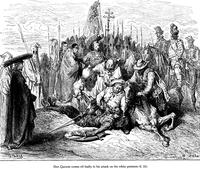
Don Quixote
Gustave Dore
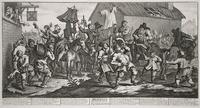
Hudibras Encounters the Skimmington, from 'Hudibras', by Samuel Butler
William Hogarth
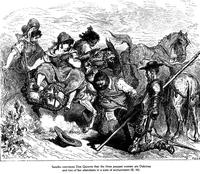
Don Quixote
Gustave Dore
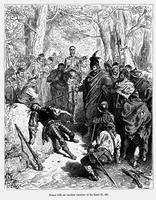
Don Quixote
Gustave Dore
Don Quixote
Gustave Dore
Don Quixote
Gustave Dore
Don Quixote
Gustave Dore
Don Quixote
Gustave Dore
Don Quixote
Gustave Dore
Don Quixote
Gustave Dore
Hudibras' First Adventure, from 'Hudibras' by Samuel Butler
William Hogarth
Don Quixote
Gustave Dore
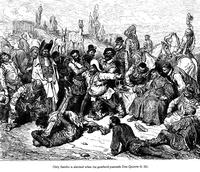
Don Quixote
Gustave Dore
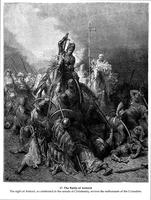
The Battle of Antioch
Gustave Dore
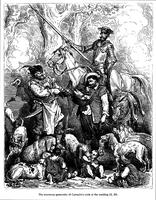
Don Quixote
Gustave Dore
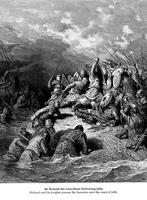
Richard I the Lionheart delivering Jaffa
Gustave Dore
Lotz Itt is Antik Tárgyat Óhajtott, Félvén Attól, Hogy a Magyar Kultúra Történetéből Nem Lehet Elég Anyagot Meríteni
Károly Lotz