
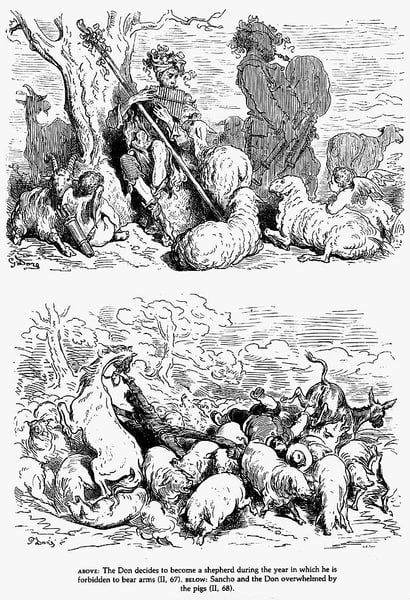
Expertenanalyse zu Gustave Dores Don Quixote
Stil: Romanticism · Genre: illustration
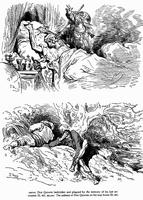
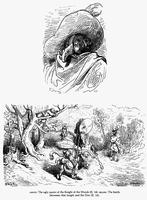
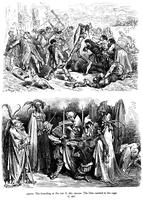
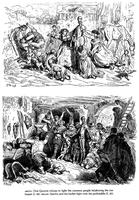
Gustave Doré’s Don Quixote, executed in the Romantic style as an illustration, is significant for its powerful synthesis of literary narrative and visual drama—a hallmark of Romanticism’s fascination with the heroic, the fantastic, and the deeply emotional. As an illustration, the work transcends mere accompaniment to Cervantes’ text; it captures the sublime pathos and absurd grandeur of the deluded knight, embodying the Romantic ideal of the solitary individual confronting an indifferent or enchanted world. Doré’s mastery of chiaroscuro and intricate linework invests the scene with a theatrical, almost dreamlike intensity, reflecting Romanticism’s emphasis on subjective experience and the dramatic interplay of light and shadow. In this, Don Quixote stands as a quintessential example of how Romantic illustration could elevate a literary figure into an icon of human aspiration and folly, merging the illustrative genre with the epoch’s deepest aesthetic concerns.
Visuell ähnlich
20 Werke mit ähnlicher Komposition und Farbpalette
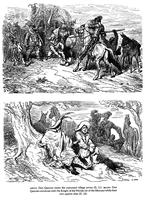
Don Quixote
Gustave Dore
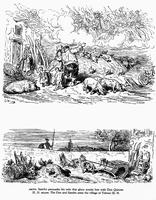
Don Quixote
Gustave Dore
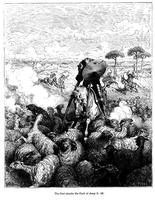
Don Quixote
Gustave Dore
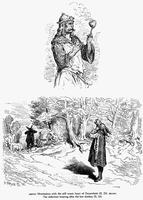
Don Quixote
Gustave Dore
The Large Shepherdess
Jean-Francois Millet
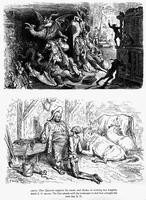
Don Quixote
Gustave Dore
Seated Woman with a Basket and Livestock
Adriaen van de Velde
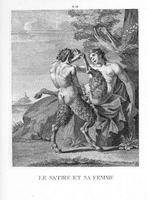
The satire and his wife
Agostino Carracci
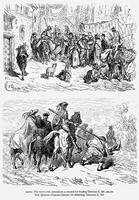
Don Quixote
Gustave Dore
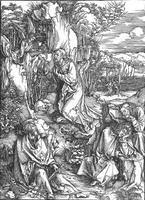
Christ on the Mount of Olives
Albrecht Durer
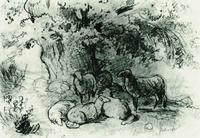
Herd of sheep under an oak tree
Ivan Shishkin
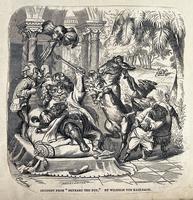
The Lion Dressed as King is Presented with a Bouquet of This
Wilhelm von Kaulbach
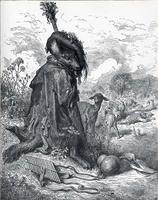
Shepherd wolf
Gustave Dore
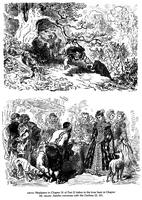
Don Quixote
Gustave Dore
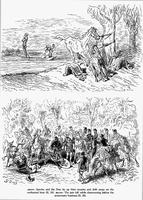
Don Quixote
Gustave Dore
Don Quixote
Gustave Dore
Reineke Fuchs1
Wilhelm von Kaulbach
Don Quixote
Gustave Dore
Don Quixote
Gustave Dore
Don Quixote
Gustave Dore